
How Public Record Layers Reveal Deal Potential
Public record layers are aggregated sets of government and municipal data that, when combined, reveal motivated sellers and undervalued properties before they reach the open market. Real estate investors who understand how public record layers reveal deal potential gain a measurable timing advantage over competitors crowded around the same listed inventory. The core method is called data stacking: pulling multiple distress signals from sources like tax delinquency rolls, lis pendens filings, probate records, and code enforcement logs, then overlapping them on a single property to score motivation probability. A motivated seller profile typically includes absentee ownership, high equity, tax delinquency over one year, and unresolved code violations. That combination does not appear on any MLS. It lives in public records, waiting for investors who know where to look.
How public record layers reveal deal potential through distress signals
The most reliable public records for deal discovery fall into seven categories. Each one tells a different part of the ownership story. Together, they build a picture of motivation that no single source can produce alone.
Tax delinquency records: A property owner who has missed property tax payments for more than one year is under real financial pressure. County tax collector records are public and updated regularly, making them one of the most accessible distress signals available.
Foreclosure and lis pendens filings: A lis pendens filing signals that a lender has initiated legal action after missed mortgage payments. These owners face equity loss and a ticking clock, making them among the strongest off-market lead sources.
Probate and death records: When a property owner dies, the estate often needs to liquidate assets quickly. Probate filings within 12 months of death are a real-time signal that inherited property may be available at a discount.
Divorce filings: Courts require asset disclosure in divorce proceedings. A divorce filing within six months often precedes a forced property sale, particularly when both parties want liquidity fast.
Code enforcement and HOA violations: Unresolved violations indicate deferred maintenance and, frequently, financial distress. An owner who cannot afford repairs is often an owner who cannot afford to hold the property.
Vacancy indicators: Utility disconnects and postal vacancy data show that a property generates carrying costs without rental income. Vacant properties raise holding costs and accelerate the motivation to sell.
Deed types and transfer frequency: Quit claim deeds, trustee deeds, and rapid ownership transfers all signal non-standard transactions. High transfer frequency on a single parcel often points to financial maneuvering worth investigating.
Investors who pull from all seven categories build a contact list that is fundamentally different from one built on a single filter. The difference is not just quantity. It is the quality of motivation behind each name.
Why layering multiple indicators increases predictive accuracy

Data stacking is the practice of applying multiple public record filters to the same property to compound the probability of seller motivation. A single indicator like absentee ownership is common. Millions of properties qualify. Add tax delinquency, and the list shrinks. Add a code violation and 15 or more years of ownership, and you are left with a small group of owners who are very likely motivated to sell.
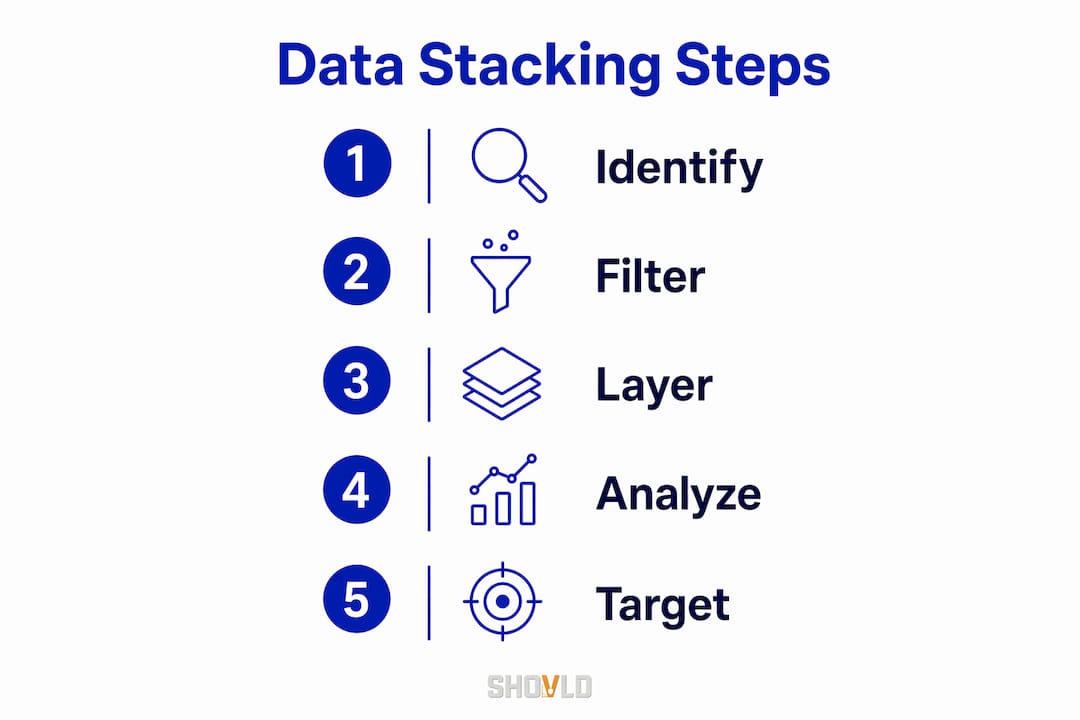
The logic is straightforward. Each layer adds a condition that the owner must meet. Fewer owners meet all conditions. Those who do are under compounded pressure from multiple directions at once. That pressure translates directly into negotiating flexibility for the investor.
A practical stacking sequence looks like this:
Start with ownership type. Filter for absentee owners. This removes owner-occupants who are less likely to sell at a discount.
Add financial distress. Overlay tax delinquency records from the county tax collector. Owners behind on taxes are already in a cash-flow problem.
Add legal pressure. Cross-reference lis pendens or probate filings. Legal proceedings create deadlines that motivate action.
Add physical distress. Pull code enforcement violations. Properties with open violations signal neglect and financial strain.
Add tenure. Filter for ownership of ten or more years. Long-term ownership correlates with deferred maintenance and eventual motivation to sell.
Pro Tip: Do not treat a short list as a failure. A stack of five filters that produces 40 names is more valuable than a single filter producing 4,000. Response rates and conversion rates both improve as list quality rises.
The risk in stacking is over-filtering on stale data. If your tax delinquency file is six months old and your code violation data is from a different quarter, the stack produces false confidence. Data freshness is not optional. It is the foundation of the method.
What are the best practices for integrating public records into your workflow?
Effective investors treat public record collection as a recurring operational task, not a one-time research project. The cadence matters as much as the data itself.
Pull pre-foreclosure and probate filings weekly. These records move fast. A lis pendens filed on Monday can trigger outreach by Friday, before any other investor has made contact.
Build stacked lists monthly. Monthly list builds give you time to cross-reference county assessor data, tax collector records, and clerk recordings into a single property profile. Combining these sources captures ownership, financial, and legal status in one view.
Verify through title searches before closing. Public records contain errors. A title search confirms ownership chain, lien status, and encumbrances that raw record pulls may miss. Never skip this step regardless of how clean the data looks.
Use AI tools to detect patterns across large data sets. Platforms like Shovld aggregate permit activity, code violations, HOA pressure, and municipal records across multiple markets. They surface scored opportunities that manual cross-referencing would take hours to produce.
Document your stack logic. Write down which filters you applied and in what order. This lets you replicate winning stacks in new markets and identify which layers drove the best results.
Pro Tip: When you find a property that matches four or more stack criteria, pull the ownership entity type before reaching out. An LLC registered to a registered agent address rather than a personal address signals a sophisticated owner who may respond better to a direct written offer than a cold call.
The investors who build predictable pipelines are not working harder than their competitors. They are working earlier. The AI-powered signal tools available in 2026 make that early position accessible without a full research team behind you.
What nuances should investors watch for when reading public record layers?
Public records are not clean data. They are government filings produced by dozens of agencies with different update schedules, formatting standards, and accuracy levels. Treating them as gospel is a mistake. Treating contradictions as noise is an even bigger one.
Contradictory data in public records is not an error to discard. It is a signal to investigate. An address collision between a deed record and a tax roll often means the owner is obscuring their location, which itself is a motivation indicator worth pursuing.
Skilled analysts treat contradictions as signals rather than data quality problems. A mismatch between the mailing address on a tax bill and the registered address on an LLC filing can escalate a routine lead into a high-priority opportunity.
Additional nuances worth tracking:
Ownership entity types matter. A property held by a revocable living trust often signals an aging owner. A property held by a series LLC may indicate a portfolio investor under financial pressure at the entity level, not just the property level.
Registered agent addresses are a red flag and an opportunity. When every LLC in a portfolio shares the same registered agent address, the owner is likely shielding personal information. That privacy behavior does not reduce motivation. It just requires a different outreach approach.
Privacy shielding methods create artificial data gaps. Some owners use land trusts or nominee ownership to obscure their identity. These gaps are not dead ends. They are invitations to dig deeper through deed chain analysis and hidden equity research.
AI is shifting discovery from reactive to proactive. Predictive analytics platforms now score properties based on signal combinations before any distress event becomes public knowledge. That shift means the competitive window for early contact is shrinking for investors who rely on manual methods.
Independent verification remains non-negotiable. AI-enabled deal analytics improve bid confidence, but they do not replace a title search or a direct conversation with the owner. Vendor assumptions embedded in automated tools can carry errors that cost you a deal or a deposit.
Key Takeaways
Public record layers reveal deal potential most reliably when multiple distress signals overlap on a single property, creating a compounded motivation score that no single data source can produce.
PointDetailsData stacking multiplies accuracyCombining absentee ownership, tax delinquency, code violations, and long tenure produces high-probability motivated seller lists.Weekly pulls capture fast-moving signalsPre-foreclosure and probate filings move quickly; early contact before competitors is the primary timing advantage.Contradictions are signals, not errorsMismatched records between deed filings and tax rolls often indicate ownership obscuring, which itself signals motivation.Verify every record before closingTitle searches confirm lien status and ownership chain that raw public record pulls frequently miss.AI tools extend reach without adding headcountPlatforms like Shovld score and surface opportunities across multiple markets faster than manual cross-referencing allows.
Why I still trust the stack over any single data source
I have watched investors chase shiny new data products that promise to replace the fundamentals. They rarely do. The stack works because it mirrors how real financial pressure actually builds on a property owner. Nobody loses a house over one problem. It is always a combination: the tax bill they ignored, the code violation they could not afford to fix, the mortgage they stopped paying six months ago. When you find all three on the same address, you are not looking at a coincidence. You are looking at a person who needs a solution.
The hardest lesson I have learned is that automation does not replace judgment. It accelerates it. Shovld can surface a scored opportunity in seconds. But reading the ownership entity structure, deciding whether to send a letter or make a call, and knowing when a data gap means “keep digging” versus “move on” — that still requires a human who understands what the records are actually saying. The investors who win in 2026 are the ones who use pre-foreclosure identification tools to get in early, then apply real judgment to close the gap between a signal and a signed contract.
Layering is not a trend. It is the foundational method. Everything else, including predictive AI, is built on top of it.
— Avi
Shovld puts layered public record analysis to work for you
Real estate investors who want early visibility into distressed properties before the market reacts need more than a single data feed. Shovld aggregates permit activity, code violations, HOA pressure, tax delinquency signals, and municipal records across multiple U.S. markets into a single scored opportunity view.

The platform does the cross-referencing that would otherwise take hours of manual county research. Shovld’s intelligence plans are built for investors and real estate professionals who need verified, scored leads rather than raw data dumps. If you are ready to act before the market reacts, the pricing page is the right next step.
FAQ
What are public record layers in real estate investing?
Public record layers are multiple government data sources, such as tax rolls, lis pendens filings, probate records, and code enforcement logs, combined on a single property to reveal seller motivation. Layering these sources produces a more accurate picture of deal potential than any single record type alone.
How does data stacking improve motivated seller targeting?
Data stacking applies multiple distress filters to the same property, narrowing a large list to a small group of owners under compounded financial and legal pressure. A stack combining absentee ownership, tax delinquency, code violations, and long tenure produces a list with significantly higher motivation probability than a single-filter approach.
Which public records are the strongest deal indicators?
Lis pendens filings, probate records within 12 months of death, and tax delinquency over one year are consistently the strongest individual indicators of motivated sellers. When these appear together on a single property, the motivation signal is highly reliable.
How often should investors pull public record data?
Pre-foreclosure and probate filings should be pulled weekly to capture fast-moving opportunities before competitors make contact. Stacked lists built from county assessor, tax collector, and clerk recordings work best on a monthly cycle to allow thorough cross-referencing.
Do contradictions in public records hurt or help deal analysis?
Contradictions in public records are signals worth investigating, not errors to discard. A mismatch between a deed address and a tax mailing address often indicates an owner who is obscuring their location, which can itself be a motivation indicator that advances the analysis.