
Permit Pull Lead Generation Explained for Contractors
Permit pull lead generation is the process of using publicly available building permit data to identify active construction projects and generate sales leads before competitors even know the work exists. Every time a property owner or contractor files a permit, that filing becomes a public record containing the project address, permit type, estimated project value, and often the contractor’s contact information. That record is a forward-looking signal. It tells you a project is happening, who owns the property, and roughly how much money is in play. Contractors and real estate investors who tap into this data source shift from chasing work to anticipating it, which is the core timing advantage that separates predictable pipelines from feast-or-famine cycles.
What is permit pull lead generation and how does it work?
A building permit is an official government authorization to begin construction, renovation, or repair work on a property. Permit data includes project type, property address, estimated value, and often contractor information, making each filing a forward-looking sales lead signal. That combination of intent and detail is what makes permit data so valuable compared to cold lists or shared lead platforms.
The term “permit pull” refers to the act of obtaining a permit from a local building authority. In the context of lead generation, it means pulling permit records from municipal databases to identify projects in your target market. The two concepts are related but distinct. A contractor pulls a permit to start legal work. A sales professional pulls permit records to find that contractor or property owner before the job is awarded.

Permit records are public documents in most U.S. jurisdictions. Most U.S. cities with 100,000 or more residents publish permit data through open data portals using the Socrata REST API, which means you can access this information for free with the right technical setup. Smaller municipalities often post permit logs on their planning department websites, though update frequency varies widely.
Contractors and investors access permit data through three main channels:
Municipal open data portals: Free, direct access via city or county websites. Requires manual filtering and regular checking.
API integrations: Developers can query Socrata-compatible portals programmatically to pull fresh records on a schedule.
Subscription platforms: Services that aggregate, clean, and deliver permit data filtered by trade type, project value, or geography.
Pro Tip: Filter permit records by estimated project value and trade type before building your outreach list. A plumbing contractor targeting commercial remodels has no use for residential fence permits. Narrow the data first, then work the leads.
How do contractors and investors benefit from permit-based leads?
The core benefit is timing. Permit pulls enable a shift from reactive to proactive lead generation, surfacing opportunities before public bids or listings appear. That window between permit filing and project kickoff is where the real competitive advantage lives.
Most contractors compete for the same jobs through the same channels: referrals, shared lead platforms, and word of mouth. Those channels are crowded around the same fire. Permit data gives you a different fire entirely, one that most of your competitors have not found yet.
The timing advantage is not marginal. A lead contacted within five minutes of permit data availability is 21 times more likely to convert than one contacted later. That statistic reflects a basic truth about buyer psychology. When a property owner has just committed to a project by filing a permit, they are in active decision mode. Reaching them at that moment is categorically different from cold outreach weeks later.
“Permit-based lead generation succeeds by combining property fit with real-time intent signals, identifying projects just as owners commit. Timely outreach to leads generated from permit data significantly improves conversion versus shared lead platforms where competition is high.”
Trade-specific benefits are significant. Plumbing leads from permits carry conversion rates of 12–16%, driven by the urgency built into new construction and remodeling signals. HVAC, electrical, and general remodeling contractors see similar lift when they reach property owners before subcontractor decisions are finalized.
Real estate investors benefit differently. A permit filing on a distressed property signals that an owner is investing money into a renovation, which can indicate a future sale or a motivated seller who may want to exit before the project costs escalate. Permit data reveals real estate investment opportunities that no listing service shows because the property is not yet on the market.
How to implement permit pull lead generation step by step
A repeatable permit lead process requires four components: a data source, a filtering system, an outreach workflow, and a timing discipline.
Identify your target jurisdictions. Start with the cities or counties where you actively work or want to grow. Check whether each municipality publishes permit data through an open data portal or requires a public records request.
Set your filter criteria. Decide which permit types matter to your business. A roofing contractor wants residential re-roof and storm damage permits. A commercial general contractor wants new construction and tenant improvement permits. Filter by permit type, estimated project value, and property classification.
Establish a lookback window. A seven-day lookback window balances lead freshness with a manageable data volume for outreach. Pulling 90 days of permits at once creates a backlog you cannot work effectively.
Organize and score your leads. Sort permits by estimated value, then by permit type priority. A $250,000 commercial remodel outranks a $15,000 residential addition for most trade contractors. Build a simple scoring system and work the top tier first.
Execute outreach within the timing window. Contact the property owner or general contractor as soon as the permit appears in the data feed. Phone calls outperform email at this stage because the decision is fresh and the owner is in active planning mode.
Track and iterate. Log every outreach attempt and outcome. After 30 days, review which permit types and project values produced the best conversion. Adjust your filter criteria accordingly.
StepActionTimingData pullQuery municipal portal or platformWeekly or dailyFilteringApply trade type and value filtersImmediately after pullScoringRank leads by value and urgencySame dayOutreachCall or email top-tier leadsWithin 24 hoursFollow-upSecond contact attempt48–72 hours laterReviewAnalyze conversion by permit typeMonthly
Pro Tip: If you are manually pulling from municipal portals, set a calendar reminder to check the data on the same day each week. Consistency matters more than frequency. Missing a week is less damaging than pulling data sporadically and letting fresh leads go cold.
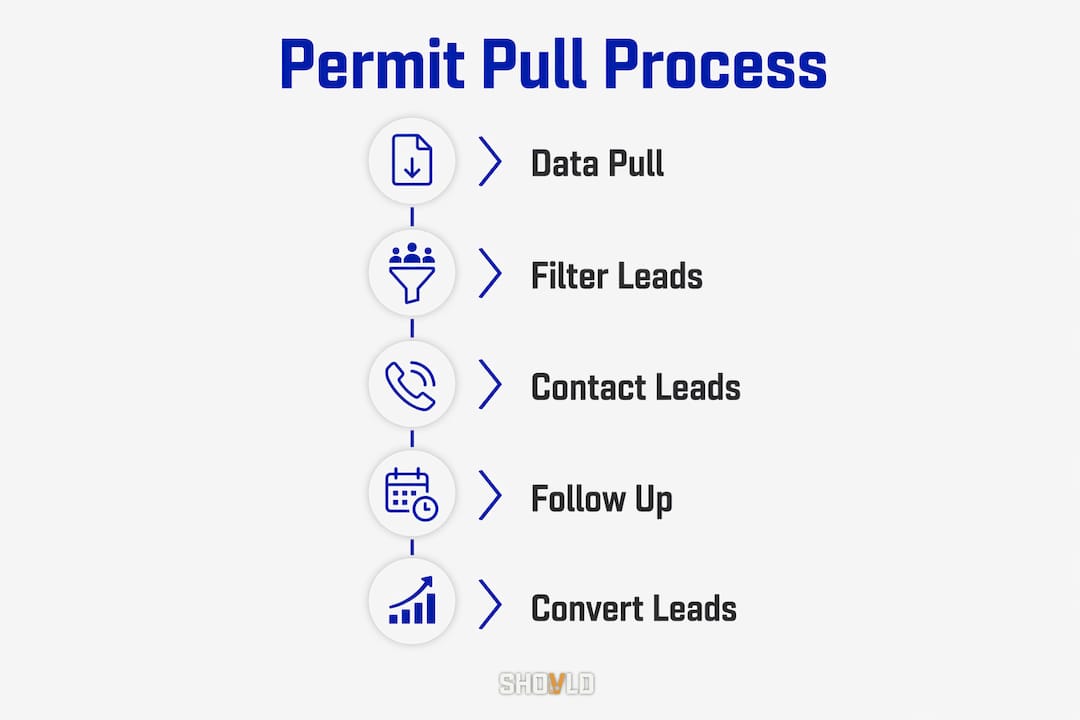
Automation is available for contractors who want to scale. Subscription platforms deliver filtered permit lead data on a schedule, removing the manual effort of querying portals and cleaning raw records. The tradeoff is cost versus time. Manual pulls are free but labor-intensive. Subscription services cost money but return hours of prospecting time each week.
What challenges come with permit pull lead generation?
Permit data is powerful, but it is not clean or consistent. Understanding the limitations prevents wasted effort and false confidence in your pipeline.
Update frequency varies by jurisdiction. Some cities update their open data portals daily. Others update weekly or monthly. A permit filed three weeks ago is a cold lead, not a hot one. Always check the “last updated” timestamp on any data source before building outreach.
Permit approval timelines are unpredictable. Standard residential permits cost $200–$800, with approval times ranging from one day to eight or more weeks depending on project complexity and local government workload. A permit in the queue is not a permit approved. Track both filed and approved permits separately.
Data quality degrades at the edges. Rural counties and small municipalities often lack digital permit systems. Their records may be paper-based or inconsistently digitized, which limits coverage in those markets.
Not every permit signals a real opportunity. A homeowner pulling a permit for a $5,000 deck replacement is not the same lead as a developer pulling permits for a $2 million commercial buildout. Without filtering by estimated value and project type, you waste outreach time on low-potential records.
Permit responsibility carries legal weight. Licensed contractors should pull their own permits to retain liability and code compliance responsibility. When a homeowner is asked to pull a permit on behalf of a contractor, that often signals the contractor is unlicensed. As a lead generator, recognizing this pattern helps you avoid problematic project situations and identify where legitimate contractors are needed.
Data overload is a real risk. A large metro area can generate hundreds of permits per week. Without a disciplined filtering and scoring system, the volume becomes noise rather than signal.
The solution to most of these challenges is specificity. Narrow your geography, tighten your filter criteria, and commit to a consistent review cadence. Permit data rewards contractors who treat it as a system, not a one-time tactic.
Key Takeaways
Permit pull lead generation gives contractors and real estate investors a timing advantage that shared lead platforms and referral networks cannot match, because it surfaces active projects at the moment of commitment, before competition arrives.
PointDetailsTiming is the core advantageContacting a lead within the permit filing window dramatically increases conversion rates.Filter before you outreachNarrow permits by trade type and estimated value to focus on highest-potential projects.Use a seven-day lookback windowWeekly data pulls keep leads fresh without creating an unworkable backlog.Verify data freshness by jurisdictionUpdate frequency varies widely; always check timestamps before building your outreach list.Licensed contractors pull their own permitsRequests for homeowners to pull permits signal unlicensed work and carry liability risk.
Why I think most contractors are sleeping on this
The contractors I see winning consistently are not the ones with the biggest marketing budgets. They are the ones who figured out that the game is about timing, not volume. Permit data is the clearest timing signal available in construction, and most of the industry is still ignoring it.
The common objection I hear is that permit data is too raw, too messy, or too hard to act on. That was true five years ago. The infrastructure for accessing, filtering, and delivering permit records has improved significantly. The barrier is not technical anymore. It is behavioral. Most contractors are comfortable with the channels they know, even when those channels are expensive and crowded.
The other mistake I see is treating permit data as a one-time experiment rather than a system. Contractors pull a week of permits, send a few emails, get no immediate response, and conclude it does not work. Permit lead generation requires consistency. The conversion happens when your outreach lands at the right moment in the owner’s decision cycle, and that moment is different for every project. You have to be in the data every week to catch it.
My practical advice: start with one jurisdiction, one permit type, and one outreach method. Run it for 60 days before drawing conclusions. The contractors who stick with it long enough to refine their filter criteria and outreach timing are the ones who build predictable pipelines. The ones who quit after two weeks go back to paying for shared leads and wondering why their margins are thin.
Public records for leads are not a secret. They are just underused. That gap is your opportunity.
— Avi
How Shovld turns permit data into a predictable lead system
Contractors and investors who want the timing advantage of permit data without the manual effort of querying municipal portals have a direct path forward with Shovld.

Shovld is an AI-powered signal intelligence platform that tracks permits, code violations, distressed-property indicators, and other public-record signals across multiple U.S. markets. The platform scores and delivers verified opportunities so you can focus on outreach, not data wrangling. Instead of checking a dozen municipal portals each week, you receive filtered, prioritized leads matched to your trade type and target geography. Shovld’s pricing plans are built for contractors and investors who want a consistent, scalable lead source without the overhead of building a data operation from scratch.
FAQ
What is permit pull lead generation?
Permit pull lead generation is the practice of using public building permit records to identify active construction projects and contact property owners or contractors before competitors do. It turns government filings into a forward-looking sales pipeline.
How do I access building permit data for lead generation?
Most U.S. cities with 100,000 or more residents publish permit data through open data portals using the Socrata REST API, which is freely accessible. Smaller municipalities may require a public records request or a subscription platform to access consistent data feeds.
What permit types generate the best leads for contractors?
The best permit types depend on your trade. Plumbing and HVAC contractors benefit most from new construction and remodeling permits, where urgency is high. General contractors and investors should prioritize commercial new construction and tenant improvement permits by estimated project value.
How quickly should I contact a lead after a permit is filed?
Contact the property owner or contractor as soon as the permit appears in your data feed. A lead contacted within five minutes of data availability is 21 times more likely to convert than one reached later, making speed the single most important outreach variable.
What are the biggest risks in permit-based lead generation?
The main risks are stale data from infrequent municipal updates, data overload from unfiltered permit volumes, and misreading permit responsibility signals. Always verify data freshness, filter by project value and type, and recognize that homeowner-pulled permits often indicate unlicensed contractor involvement.