
How to Contact Homeowners Before Competitors Win Them
Contractors who contact homeowners before competitors do so by combining automated public-record detection with personalized, multi-touch outreach during the first 90 days after a home sale closes. 85% of new homeowners hire the first contractor who contacts them post-move when the timing is right. That single fact defines the entire game. New homeowners are in an active buying mode, spending more on home services than at any other point in the ownership cycle. The contractors who reach them first, with the right message, build trust before anyone else even shows up.
How to contact homeowners before competitors: the data you need first
Reaching homeowners first is not about working harder. It is about seeing the signal before your competition does. The industry term for this approach is new mover marketing, and it relies on two primary data sources: public property records and National Change of Address (NCOA) mover data.
Public property records, specifically deed recordings, are filed at the county level after every real estate transaction. Public records surface in 14–45 days after closing, while NCOA data typically appears in 7–21 days. Automation bridges that timing gap by continuously monitoring these sources and alerting you the moment a new owner appears in your target zip codes.

Data enrichment fills the gaps that raw records leave behind. A deed recording gives you a name and an address. Data enrichment APIs match that name to a phone number and email address, turning a cold property record into a contactable lead. Match rates vary by provider, but quality enrichment services typically return usable contact data for the majority of new homeowners in a given market.
The table below summarizes the key data sources contractors use to approach homeowners early.
Data SourceWhat It ProvidesTypical Lag TimeCounty deed recordingsNew owner name and property address14–45 days post-closeNCOA mover dataConfirmed address change with move date7–21 days post-moveData enrichment APIsPhone number and email match24–72 hours after record matchPermit recordsPlanned renovation or repair signals1–7 days after permit filing
CRM integration is the final piece. Raw data sitting in a spreadsheet does not trigger outreach. A CRM connected to your data sources fires automated workflows the moment a new homeowner record enters your system. Shovld tracks permits, deed recordings, and other public-record signals across multiple U.S. markets, feeding verified and scored opportunities directly into contractor workflows. That means you spend zero time manually searching county websites and more time talking to homeowners who are ready to hire.
Pro Tip: Set geographic filters in your data feed to match your actual service radius. Pulling records from counties you cannot serve wastes budget and dilutes your contact enrichment rate.
How do you design a multi-touch sequence that actually books jobs?
A single mailer does not win a homeowner. Multi-touch campaigns lift response rates 40–60% over single-drop mailers. The reason is simple: homeowners are overwhelmed in the first weeks after moving. They need repeated, familiar contact before they feel confident enough to call.
The message framing matters as much as the timing. Leading with a discount positions you as a commodity. Leading with a neighborhood welcome and a specific service relevant to the property builds trust. A roofing contractor who references the age of the roof or recent storm activity in the area sounds like a neighbor, not a salesperson.
Optimal timing targets 30–60 days post-move for initial contact, with follow-ups extending through the 90-day window. Conversion rates drop sharply after two weeks for contractors who wait. The goal is to be the first voice they hear and the most familiar name they see when they are ready to decide.
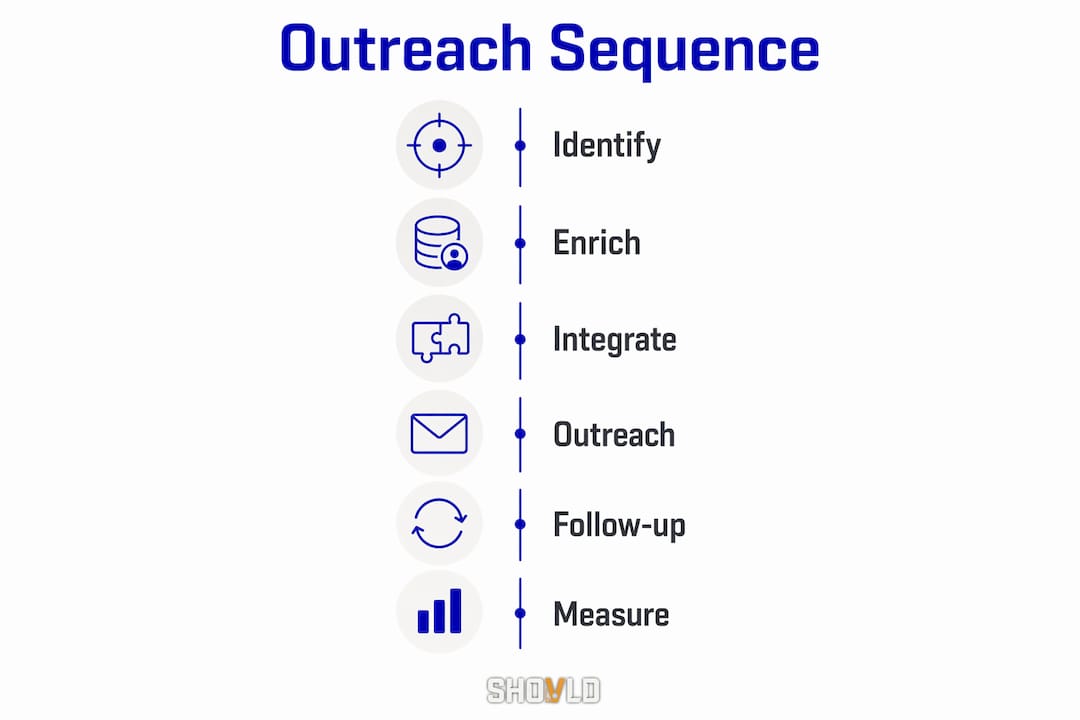
A practical 6-touch sequence looks like this:
Day 3–5 (Direct mail, welcome postcard): Introduce your company with a neighborhood welcome message. Reference the property address. No hard sell.
Day 7–10 (Email): Send a brief introduction email with a free inspection offer or a relevant service tip for new homeowners. Keep it under 150 words.
Day 14–18 (SMS): Send a short text referencing your earlier mailer. Ask if they have questions about the home. Response rate on SMS at this stage is high because the homeowner already recognizes your name.
Day 30 (Direct mail, service-specific offer): Follow up with a targeted offer tied to a specific service. A water damage restoration company might reference local flood zone data. A roofer might note the average age of roofs in the neighborhood.
Day 45–50 (Email): Share a short case study or before-and-after from a nearby job. Radius marketing around recent jobs provides social proof that cold outreach cannot replicate.
Day 75–90 (Direct mail or SMS): Final touch with a time-sensitive offer. Keep the tone warm, not urgent. This is the last impression before the window closes.
Pro Tip: Use property-specific data in every touch. Referencing the square footage, year built, or neighborhood name in your message increases perceived relevance and drives higher booking rates.
Common mistakes that kill your first-mover advantage
Most contractors lose the timing race not because they lack ambition, but because they fall into predictable traps. Knowing these traps is the fastest way to fix your outreach before it costs you jobs.
Contacting too late. Waiting more than 30 days to send the first touch puts you behind contractors who automated their detection. Conversion rates drop from 22% within 72 hours to 8% after two weeks. Every day of delay is a measurable loss.
Poor data hygiene. Contacting the same homeowner twice, or reaching out to someone who already hired you, wastes budget and damages your reputation. Deduplication and segmentation of homeowner data prevent redundant contact and protect campaign ROI.
Discount-first messaging. Opening with a price cut signals desperation. Homeowners who respond to discount-only offers are often the hardest to retain and the most likely to shop around. Lead with value and neighborhood relevance instead.
Single-channel outreach. Relying only on direct mail, or only on email, cuts your response rate significantly. Multi-channel outreach including mail, email, and SMS raises response rates by 40–60% compared to single-channel efforts.
No suppression list. Failing to remove existing customers from new mover campaigns creates awkward double-contact situations and inflates your cost per acquisition unnecessarily.
The fix for most of these problems is the same: automate the data intake, build suppression logic into your CRM, and set your sequence to fire automatically when a new record enters your system. Manual processes introduce delay and human error. Both kill first-mover advantage.
How do you measure whether your outreach is actually working?
Tracking the right metrics separates contractors who grow predictably from those who guess. Four KPIs define the health of any new homeowner outreach program.
Contact enrichment rate measures how often a raw property record converts into a contactable lead with a phone number or email. A high enrichment rate means your data sources and APIs are working. A low rate signals a data quality problem upstream.
Open rate and response rate track engagement at the channel level. Email open rates and SMS response rates tell you whether your message framing is landing. If open rates are strong but response rates are low, the message body needs work, not the subject line.
Booking conversion rate is the number that matters most. Benchmark booking conversion runs 8–14% for standard campaigns, while high performers reach 18–28%. The gap between average and high performance almost always comes down to timing, personalization, and channel mix.
Cost per acquisition ties everything together. Divide your total campaign spend by the number of booked jobs. If your cost per acquisition is rising, the problem is usually data quality, poor timing, or a sequence that runs too long without a response trigger.
Pro Tip: Run A/B tests on your subject lines and postcard headlines every 60 days. Small copy changes can shift booking conversion by several percentage points without changing your budget.
Engaging homeowners before they search online also reduces acquisition costs by removing you from price bidding wars entirely. A homeowner who already knows your name does not need to compare three quotes on a lead aggregator platform.
Key Takeaways
Contractors who contact homeowners first, using automated data detection and multi-touch outreach within the 90-day post-move window, consistently outbook competitors who rely on reactive lead generation.
PointDetailsFirst contact wins85% of new homeowners hire the first contractor who reaches them at the right time.Timing is criticalConversion rates drop sharply after two weeks; target initial contact within 30–60 days of closing.Multi-touch beats single-dropMail, email, and SMS sequences lift response rates 40–60% over single-channel outreach.Data quality drives ROIDeduplication and enrichment prevent wasted spend and protect your cost per acquisition.Measure and iterateTrack enrichment rate, open rate, and booking conversion to find and fix weak points fast.
Timing is the only variable that actually matters
I have watched contractors with smaller budgets consistently outbook larger operations, and the difference is almost never the quality of their work. It is timing. The contractors who win are the ones who show up before the homeowner has formed an opinion about who to call.
The post-move window is genuinely narrow. A homeowner who moves in on a Friday and gets a warm, relevant postcard by the following Wednesday is in a completely different mental state than one who gets their first outreach six weeks later. By week six, they have already talked to neighbors, searched online, and probably hired someone. You are not competing for a new customer at that point. You are trying to displace an existing relationship.
What I find most contractors underestimate is how much personalization changes the dynamic. A generic “We’re your local roofer” mailer gets recycled. A mailer that references the neighborhood by name, mentions the average roof age in that zip code, and includes a photo from a job two streets over gets kept on the counter. That is not magic. That is data doing its job.
The contractors who will build predictable pipelines over the next three years are the ones adopting automated detection and using public records as a live feed rather than a one-time lookup. The timing problem in this industry is real, but it is also entirely solvable with the right workflow in place.
— Avi
How Shovld helps contractors reach homeowners first
Shovld was built for contractors who are tired of entering opportunities too late and competing in a crowded market. The platform continuously monitors public property records, permit filings, and other municipal signals across U.S. markets, then surfaces verified and scored leads the moment a new homeowner appears in your service area.
Shovld connects those leads directly into automated outreach workflows, so your first touch goes out within hours of a deed recording, not weeks later. The platform handles deduplication, contact enrichment, and sequence scheduling, giving contractors a predictable pipeline without manual data hunting. If you are ready to stop reacting and start reaching homeowners before the competition does, Shovld’s pricing plans are built to scale with your operation.
FAQ
What does it mean to contact homeowners before competitors?
Contacting homeowners before competitors means reaching new property owners within the first 30–60 days post-move, before they search online or receive outreach from other contractors. The contractor who makes first contact during this window wins the majority of bookings.
How quickly should I send the first outreach to a new homeowner?
The first touch should go out within 72 hours to 30 days of the deed recording. Conversion rates drop from 22% at 72 hours to 8% after two weeks, so speed is the single biggest factor in campaign performance.
What data sources help me identify new homeowners fast?
County deed recordings and NCOA mover data are the two primary sources. Deed data surfaces in 14–45 days post-close, while NCOA data appears in 7–21 days. Automated monitoring of both sources gives contractors the fastest possible alert.
How many touches does it take to book a new homeowner?
A 6-touch sequence spread across 90 days is the standard framework. Multi-touch campaigns lift response rates 40–60% over single-drop mailers, and spacing the touches builds familiarity without creating mail fatigue.
What booking conversion rate should I expect from new homeowner outreach?
Standard campaigns convert 8–14% of contacted homeowners into booked jobs. High-performing campaigns using personalized, multi-channel sequences reach 18–28% conversion, driven by timing accuracy and property-specific messaging.