
Why Property Distress Scoring Improves Acquisitions
Property distress scoring is a quantitative method that measures vendor selling pressure, giving real estate investors early visibility into negotiation windows before a property ever hits the open market. When you understand why property distress scoring improves acquisitions, you stop chasing listings and start building a pipeline of motivated sellers. Platforms like Shovld track permits, code violations, deferred maintenance patterns, and municipal records to surface these signals before the competition arrives. The result is a more deliberate acquisition strategy grounded in timing, not luck.
Why distress scoring improves acquisitions before the market reacts
Property distress scoring works by quantifying how much pressure a seller is under, which directly affects how much flexibility exists in a negotiation. A score is not a price estimate. It is a motivation estimate. That distinction changes how you approach every deal.

Distress scores above 60 indicate meaningful vendor pressure, while scores above 80 suggest significant motivation to sell. That level of motivation typically opens a 5–10% negotiation margin below asking price. Knowing this before you call the agent means you walk into the conversation with a position, not a guess.
The timing advantage is just as significant as the price advantage. Early distress signal sourcing allows investors to identify off-market assets 6–18 months before they appear on traditional listing platforms. That window eliminates the crowded-around-the-same-fire dynamic where a dozen buyers compete on the same property and margins collapse.
Here is what high distress scores actually signal in practice:
Score 60–79: Vendor is under pressure but may still be testing the market. Approach with a well-researched offer and room to negotiate.
Score 80+: Vendor motivation is significant. Structured offers grounded in comparable sales carry real weight here.
Score below 60: Distress is low. Negotiation margin is limited. Focus on fundamentals rather than timing plays.
Off-market signals: Court filings, payment defaults, and HOA pressure often precede any score update. These are the earliest indicators available.
Pro Tip: A high distress score is a confidence indicator for negotiation, not a license to lowball. Offers must remain grounded in comparable sales and property condition. Vendors under pressure still walk away from disrespectful offers.
The property distress assessment framework shifts your acquisition posture from reactive to proactive. You are no longer waiting for a broker to call. You are already in the conversation.
Does distress scoring work without strong property fundamentals?
The short answer is no. A high distress score on a poorly located property with weak growth metrics is still a bad acquisition. Distress scoring must be integrated with strong property fundamentals like location quality, rental yield, and local growth indicators for sustainable returns. The score contributes roughly 10% to an overall investment analysis. The other 90% is still fundamentals.
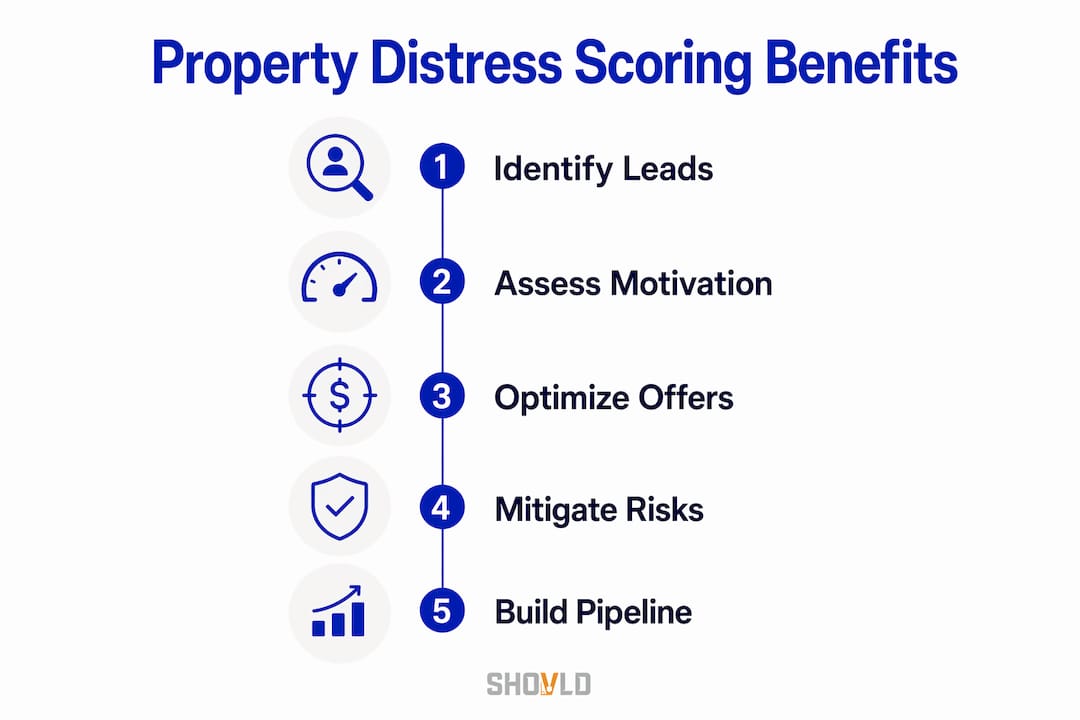
Investors who chase distress without checking fundamentals fall into a predictable trap. They buy at a discount, then discover the discount was already priced into the market because the property has structural issues, poor rental demand, or sits in a declining area. The entry price looked good. The exit strategy did not exist.
The table below shows how distress scoring interacts with fundamental property quality across acquisition scenarios:
ScenarioDistress scoreFundamentalsAcquisition outcomeBest caseHigh (80+)StrongMaximum negotiation leverage with long-term upsideGood caseModerate (60–79)StrongSolid entry with room to negotiateRisky caseHigh (80+)WeakDiscounted entry, poor long-term returnsAvoidLow (below 60)WeakNo timing advantage, no fundamental support
The combined scoring approach improves yield, cashflow, and equity building because you are not just buying cheap. You are buying well-located assets from motivated sellers. That combination is where real acquisition returns come from.
Pro Tip: Before acting on a high distress score, run the property through a full investment value evaluation that includes location metrics, comparable rents, and structural condition. The score opens the door. Fundamentals decide whether you walk through it.
Underwriting distressed deals demands balancing inherent owner distress with structural realities. Neglecting fundamentals risks failing investments regardless of how motivated the seller appears.
How early distress signals build a proprietary deal pipeline
Most investors operate reactively. A listing appears, they analyze it, they compete with other buyers, and margins shrink. Distress scoring enables investors to move from that reactive posture to a proactive one, reducing dependence on broker lists and improving deal quality over time. Consistent sourcing systems compound results. Each month you run the system, your pipeline gets deeper and your competition gets thinner.
Building a proprietary deal flow from early distress signals requires a repeatable process. Here is how serious investors structure it:
Monitor public record signals daily. Court filings, foreclosure notices, code violations, HOA pressure letters, and permit lapses all precede motivated seller behavior. Distress starts well before foreclosure, and the investors who act on early signals get the best terms.
Score and rank incoming signals. Not every signal is equal. A single missed payment is different from a pattern of code violations plus a pending foreclosure. Build a scoring threshold that filters noise from genuine opportunity.
Initiate contact before the property is listed. Off-market outreach to distressed owners produces conversations that never happen on the MLS. The seller has not yet committed to a public sale process, which means your offer faces less competition and more flexibility.
Track each opportunity through a defined pipeline stage. Signal identified, contact made, offer submitted, under contract. Without a pipeline structure, early signals get lost and timing advantages evaporate.
Review and refine your signal sources quarterly. The most valuable signals shift as market conditions change. Payment defaults may dominate in one cycle. Permit lapses and deferred maintenance may dominate in another.
Every day a distressed property remains unresolved, costs compound through fines, legal fees, and physical deterioration. That urgency works in your favor when you arrive early with a credible offer.
Best practices for using distress scores in real acquisition workflows
Distress scoring delivers the most value when it is woven directly into your underwriting and offer process, not treated as a separate research step. The score informs your negotiation posture. Your underwriting determines whether the deal makes sense at all.
Failing to track the debt timeline, such as a foreclosure deadline within 37 days, is one of the most common pitfalls in distressed acquisitions. That deadline changes everything. A lender negotiating with 37 days left behaves very differently from one with six months of runway. Missing that timing detail reduces your leverage and your loss mitigation options.
Practical workflow integration looks like this:
Anchor your offer in comparable sales, not just distress margin. A 5–10% discount off asking price is the typical negotiation window in high-distress scenarios. That discount must still produce a price supported by recent comparable sales in the same submarket.
Assess structural condition independently. A motivated seller does not fix deferred maintenance before selling. Factor repair costs into your underwriting before submitting any offer.
Align your offer with your exit strategy. A fix-and-flip exit requires different margin assumptions than a long-term rental hold. Distress scoring tells you about entry timing. Your exit plan determines whether that entry price actually works.
Avoid overvaluing the discount. The trap is paying too much because the seller seemed desperate. Desperation does not create value. The property still needs to perform after you own it.
Use distressed property signals to prioritize your outreach list, not to replace due diligence. The score narrows the field. Diligence closes the deal.
Pro Tip: Build a simple scoring matrix that combines distress score, structural condition rating, and fundamental location grade into a single acquisition priority number. Properties that score well on all three move to the top of your outreach list immediately.
The acquisition risk management benefit of distress scoring is not just about getting a better price. It is about spending your time on deals that are actually closable, with sellers who are actually motivated, before the broader market knows the opportunity exists.
Key takeaways
Property distress scoring improves acquisitions by combining vendor motivation signals with fundamental analysis to identify closable deals before they reach the open market.
PointDetailsScores above 80 signal real leverageUse this threshold to identify sellers open to 5–10% below asking price.Distress scoring is not a standalone metricAlways pair distress scores with location quality, yield, and structural condition.Early signals beat listing alertsOff-market outreach 6–18 months before listing eliminates most buyer competition.Debt timeline tracking is non-negotiableForeclosure deadlines within 37 days change lender behavior and negotiation terms.Repeatable pipelines compound over timeConsistent signal sourcing builds deal flow that grows stronger each quarter.
Why most investors are still playing the wrong game
I have watched investors spend weeks analyzing properties they found on the MLS, competing against 10 other buyers, and wondering why their margins keep shrinking. The problem is not their analysis. It is their timing. They are arriving at the party after everyone else already got there.
The shift that distress scoring creates is not subtle. When you start working from signal data instead of listing alerts, you are having conversations with sellers who have not yet decided to sell publicly. That changes the entire dynamic. You are not competing. You are the only option they have considered.
What surprises most investors when they first use a structured distress scoring approach is how many opportunities were already in their target markets. The signals were always there. Code violations, permit lapses, HOA pressure, payment defaults. They were just scattered across public records with no system to surface them. Platforms like Shovld exist specifically to solve that problem.
The misconception I see most often is treating a high distress score as a green light to make an aggressive lowball offer. That approach destroys deals and reputations. A high score means the seller is motivated. It does not mean they are irrational. Pair the score with solid comparables, a realistic repair estimate, and a clear exit plan, and you have a deal worth pursuing. Skip any of those steps and you are just gambling with extra information.
The investors who build real acquisition advantages are not the ones with the most data. They are the ones who act on the right signals at the right time with a clear process behind them.
— Avi
How Shovld helps investors act on distress signals first
Real estate investors who want a consistent edge need more than a list of distressed properties. They need verified, scored signals pulled from permits, code violations, HOA pressure, municipal records, and deferred maintenance patterns across U.S. markets before those signals become public knowledge.

Shovld does exactly that. The platform transforms scattered public record data into ranked acquisition opportunities, so you spend time on deals that are actually worth pursuing. Whether you are building a fix-and-flip pipeline or sourcing long-term rental acquisitions, Shovld surfaces the early signals that put you ahead of the market. Review Shovld’s signal intelligence plans to find the right fit for your acquisition volume and target markets.
FAQ
What does a property distress score measure?
A property distress score measures vendor selling pressure and motivation, not property value. Scores above 60 indicate meaningful pressure, while scores above 80 suggest the seller is significantly motivated to negotiate.
How much can I negotiate using a high distress score?
High distress scenarios typically support offers 5–10% below asking price. Offers must still be grounded in comparable sales and property condition to be taken seriously.
Can distress scoring replace fundamental property analysis?
No. Distress scoring contributes roughly 10% to an overall investment analysis. Location quality, rental yield, and growth metrics drive long-term returns regardless of the entry discount.
How early can distress signals identify off-market opportunities?
Proactive distress signal sourcing can surface off-market assets 6–18 months before they appear on traditional listing platforms, giving investors a significant timing advantage.
What is the biggest mistake investors make with distress scores?
The most common mistake is ignoring the debt timeline. Missing a foreclosure deadline within 37 days reduces negotiation leverage and limits loss mitigation options significantly.