
Off-Market Deal Sourcing Checklist for Investors
An off-market deal sourcing checklist for investors is a structured sequence of actions designed to uncover exclusive property opportunities before they reach the open market, enabling better pricing and terms. Off-market commercial deals close at an 8–15% discount compared to listed properties. That pricing gap is the core reason serious investors build proprietary pipelines instead of competing on the MLS. The checklist approach turns a chaotic, relationship-dependent process into a repeatable system with measurable results.
1. What channels belong on every off-market deal sourcing checklist?
Diversified sourcing is the foundation of any real estate sourcing checklist worth following. Investors who rely on a single channel, whether broker relationships or cold mail, expose themselves to dry spells when that channel underperforms. The strongest pipelines pull from at least three active channels simultaneously.
Direct owner outreach is the highest-effort, highest-reward channel. Personalized outreach yields a 3–5% reply rate for email and 8–12% for phone-first contact. Generic emails sit at 1–3%. The difference between a template blast and a property-specific message is the difference between silence and a conversation.

Broker and network referrals take longer to produce results but deliver cleaner deal flow. Building a broker network requires 3–5 new connections per week and 24–36 months before warm referrals convert at 10–20%. Brokers also bring better financials and fewer competing buyers, which reduces friction at the LOI stage.
Inbound content channels work on a longer timeline but produce the highest-quality leads. Owner-initiated inbound deals convert at 25–40%, but require 12–36 months of brand and content investment to mature. Investors who publish market commentary, case studies, or educational content attract motivated sellers who have already decided to act.
ChannelSpeed to first dealConversion rateAnnual cost estimateWeekly effortDirect owner outreach6–12 months1–5%$15,000–$50,00020–40 hoursBroker referrals24–36 months10–20%Low to moderate5–10 hoursInbound content12–36 months25–40%Moderate3–8 hoursBuy-side partners3–9 monthsVariesLow2–5 hours
Pro Tip: Run at least two outreach channels in parallel from day one. Broker relationships take years to warm up, so start them while direct outreach generates early deal flow.
2. How to define your investment criteria before sourcing begins
A tight buy-box is the most underrated item on any investor sourcing guide. Without documented criteria, your network cannot refer the right deals, and your team wastes time evaluating properties that never fit.
Your buy-box should cover four dimensions: geography, asset type, price range, and return thresholds. Geography means specific markets, submarkets, or zip codes, not a vague regional preference. Asset type means multifamily, industrial, retail, or single-family, not “whatever makes sense.” A documented buy-box drastically improves referral quality and reduces wasted effort across your team and referral partners.
Data refines targeting beyond the basics. Owner profile signals, such as years of ownership, debt maturity dates, and estate planning activity, reveal motivation before you make contact. A property owned for 20-plus years by an aging landlord in a high-appreciation market is a fundamentally different prospect than a recently purchased asset held by an institutional fund.
Define your minimum cash-on-cash return threshold and stick to it
Set a maximum price ceiling and a preferred price range within it
List three to five target zip codes or submarkets, not entire metro areas
Specify the property age, condition tolerance, and minimum unit count
Document your preferred seller profile, including motivation signals you prioritize
Pro Tip: Track motivation triggers like debt maturity dates, code violation histories, and estate filings. These signals indicate sellers who are approaching a decision point, even if they have not listed yet.
3. Essential tools for systematic outreach and deal tracking
The right infrastructure separates investors who close off-market deals consistently from those who rely on luck. Automation tools including CRM platforms, sequencers, and calling tools cut outreach management time and improve response tracking across multi-month campaigns. Annual tooling costs typically run $15,000–$60,000, which is significant but far below the cost of a missed acquisition.
CRM platform: Choose one built for deal tracking, not generic sales. You need pipeline stages, contact history, and deal scoring in one view.
Email sequencer: Automate follow-up cadences without losing personalization. Set sequences for 6, 12, and 18-month nurture tracks.
Calling tool: A power dialer with call recording and disposition logging increases phone-first contact rates and keeps your notes organized.
Data enrichment layer: Append owner contact details, financing history, and behavioral signals to basic property records. Data enrichment reveals owner behavior patterns, financing timelines, and disposition propensities that raw address lists never show.
Pipeline dashboard: Track every lead through the same intake and evaluation process. Consistent pipeline management prevents blind spots where promising deals fall through the cracks.
Pro Tip: Treat every outreach touchpoint as a brand impression, not a pitch. Sellers remember investors who sent thoughtful, property-specific notes long before they remember the ones who sent mass mailers.
4. Tactical steps for running an effective outreach campaign
A winning outreach campaign follows a specific sequence. Skipping steps, especially early qualification and personalization, collapses conversion rates and wastes months of effort.
Step 1: Build a prioritized target list of 200–500 prospects. Filter by your buy-box criteria and layer in motivation signals. A smaller, well-qualified list outperforms a massive generic one every time.
Step 2: Research each prospect before first contact. Pull ownership history, assessed value, permit activity, and any public record signals. Reference at least one property-specific detail in your first message.
Step 3: Launch a multi-channel cadence. Combine email, phone, handwritten letters, and LinkedIn. Phone-first outreach reaches 8–12% pickup rates, with 30–40% of those conversations advancing to follow-up. No single channel reaches everyone.
Step 4: Log every interaction in your CRM the same day. Note the owner’s tone, any objections, and the best time to follow up. This data becomes your competitive advantage over 12–18 months.
Step 5: Follow up across a 6–18 month window. Most off-market deals do not close on the first or second contact. Long-term nurture over 12–18 months produces deals that would never materialize from a single outreach blast.
Step 6: Measure response rates by channel and message type monthly. Identify which subject lines, call scripts, and letter formats generate the most replies. Refine your approach based on real data, not assumptions.
Step 7: Re-qualify your list every 90 days. Ownership changes, debt maturities, and market shifts alter seller motivation. A prospect who was cold six months ago may be ready to talk today.
5. How to build long-term relationships that generate repeat deal flow
Off-market deal flow is a relationship asset, not a transaction outcome. Investors who approach every owner contact as a potential long-term connection build pipelines that compound over time. Those who treat sourcing as a quick pitch cycle burn through lists and start over constantly.
Consistent, value-add communication keeps you top of mind without feeling intrusive. Send market updates relevant to the owner’s specific submarket. Share a recent comparable sale that affects their property’s value. These touches cost almost nothing and position you as a knowledgeable peer rather than a buyer hunting for a discount.
Schedule quarterly check-ins with every warm prospect in your CRM
Send a brief market update email to your full list every 60–90 days
Acknowledge major events like property anniversaries or local zoning changes
Ask for referrals from brokers, attorneys, and property managers who know motivated sellers
Respect seller timelines and never pressure a decision. Patience is a sourcing advantage.
Referral networks multiply your reach without multiplying your effort. A single commercial attorney or estate planning advisor can refer multiple motivated sellers per year. Build those relationships with the same discipline you apply to direct outreach.
Key takeaways
A systematic, multi-channel off-market sourcing approach combining direct outreach, broker relationships, and data intelligence produces the most consistent proprietary deal flow for real estate investors.
PointDetailsDiversify sourcing channelsRun direct outreach, broker referrals, and inbound content simultaneously to avoid pipeline gaps.Document your buy-boxTight, shared criteria improve referral quality and reduce time spent on deals that never fit.Invest in outreach infrastructureCRM, sequencers, and data enrichment tools sustain multi-month campaigns that manual tracking cannot.Follow up for 6–18 monthsMost off-market deals require repeated contact before a seller is ready to engage seriously.Treat sourcing as brand buildingConsistent, value-add communication builds the credibility that converts long-term contacts into closed deals.
What I’ve learned after years of chasing off-market deals
The biggest mistake I see investors make is treating off-market sourcing like a sprint. They build a list, send a few emails, make a handful of calls, and then wonder why nothing closed. Off-market investing is a long game. The discipline required is closer to farming than hunting.
I allocate 8–12 hours every week to sourcing activity, and I protect that time the way I protect due diligence time. The weeks I skip it show up in my pipeline three months later as a gap. That gap is expensive.
The second lesson took me longer to learn: a tight buy-box is not a limitation. It is a filter that makes every hour of outreach more productive. When my criteria are specific, my network sends me better leads. When they are vague, I get everything and close nothing.
The combination of human relationships and AI-powered signal data has changed how I work. Platforms like Shovld surface motivation signals I would never find manually, including permit activity, code violations, and deferred maintenance patterns. That intelligence lets me reach the right owner at the right moment, which is the only timing that matters in off-market sourcing.
— Avi
How Shovld accelerates your off-market pipeline
Real estate investors who follow a disciplined sourcing checklist still face one persistent problem: finding the right owners at the right moment before anyone else does. Shovld solves that timing problem with AI-powered signal intelligence that tracks permits, code violations, distressed-property indicators, and municipal records across multiple U.S. markets.
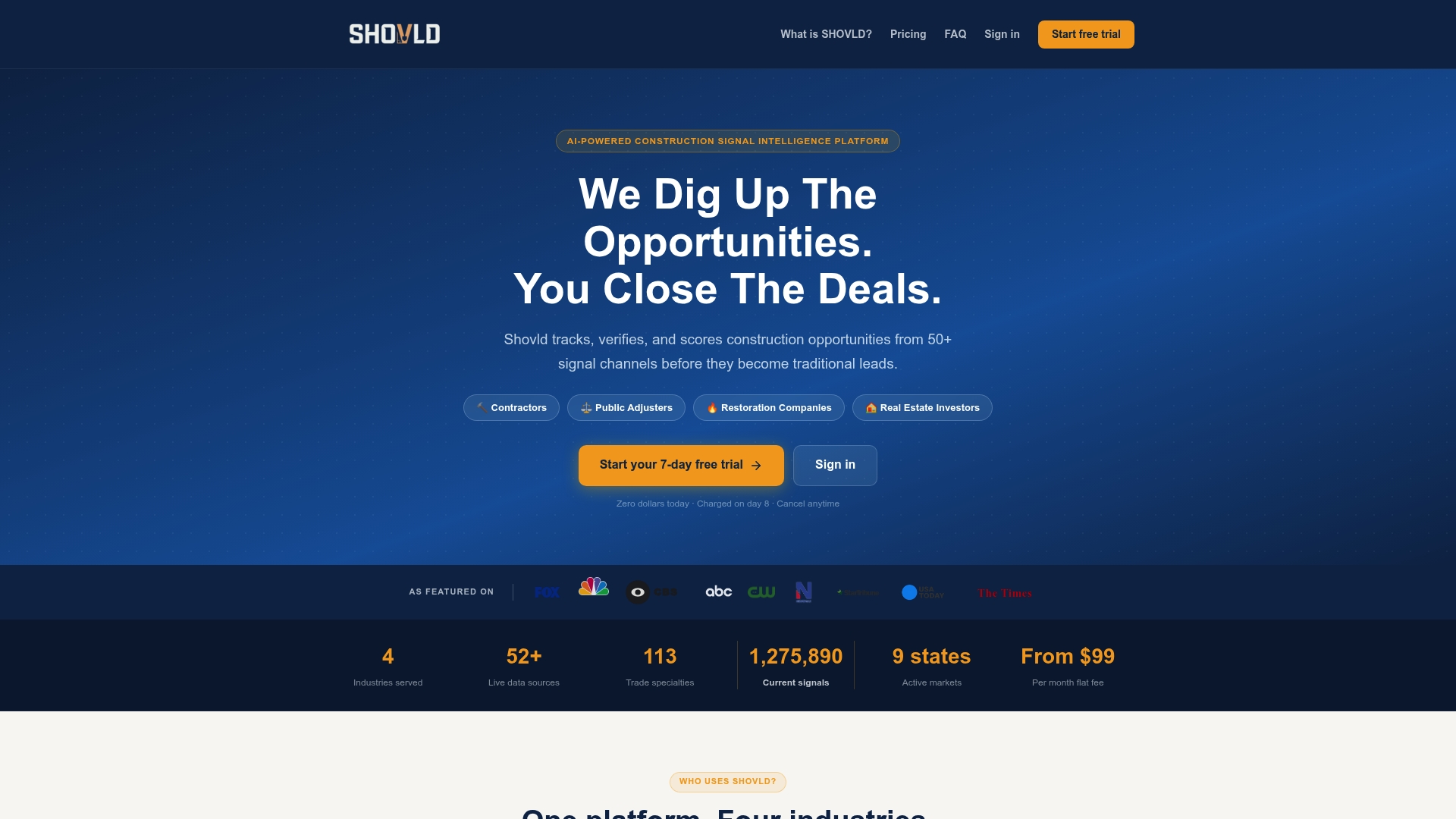
Shovld scores and verifies opportunities so you spend time on prospects with real motivation signals, not cold lists. The platform integrates CRM functionality with follow-up automation, so your outreach cadences run consistently without manual tracking. Data enrichment layers reveal owner behavior patterns and financing timelines that sharpen your targeting. See the full feature set and compare Shovld’s plans to find the right fit for your sourcing volume and market focus.
FAQ
What is an off-market deal sourcing checklist?
An off-market deal sourcing checklist is a documented sequence of steps covering buyer readiness, channel selection, outreach execution, and relationship management. It gives investors a repeatable system for finding exclusive property opportunities before they reach the open market.
How long does off-market deal sourcing take?
Direct outreach typically takes 6–12 months to produce a signed LOI, while broker referral networks require 24–36 months to generate warm, converting leads. Inbound channels take 12–36 months to mature but convert at the highest rate.
What conversion rates should investors expect from outreach?
Personalized email outreach converts at 3–5% reply rate, while phone-first outreach reaches 8–12% pickup with 30–40% of those calls advancing to follow-up conversations. Generic email blasts sit at 1–3%.
Why is a documented buy-box critical for off-market sourcing?
A tight buy-box covering geography, asset type, price range, and return thresholds gives your network and team the clarity to recognize viable deals immediately. Without it, referral partners send mismatched opportunities and your pipeline fills with noise.
How does data enrichment improve off-market outreach?
Data enrichment appends owner behavior patterns, financing timelines, and disposition signals to basic property records. That intelligence lets investors contact motivated sellers at the right moment rather than blasting undifferentiated lists and hoping for a response.