
How to Find Motivated Sellers Before Listing
A motivated seller is defined as a property owner with a time-sensitive, compelling reason to sell quickly, often at a discount, before a property ever reaches the open market. Real estate investors and buyers who know how to find motivated sellers before listing gain access to deals with less competition, better pricing, and faster closings. The standard industry term for this practice is pre-market acquisition, and it relies on reading distress signals from public records rather than waiting for a Zillow alert. Motivated sellers in real estate typically prioritize speed and certainty over price, which means the investor who shows up first with a credible offer wins.
How to find motivated sellers before listing: key data sources
The most reliable way to identify motivated home sellers is to track the public record signals that precede a listing decision. Urgent distress indicators like pre-foreclosure filings, tax delinquency, probate records, and code violations consistently reveal owners who need to sell, not just owners who want to sell. That distinction separates a quality lead from noise.
Here are the primary data sources every investor should monitor:
Pre-foreclosure (NOD filings). A Notice of Default is a public filing that signals a homeowner is behind on mortgage payments. These owners face a hard deadline and are often open to a fast, off-market sale.
Tax delinquency lists. County tax records identify owners who have not paid property taxes, a strong indicator of financial stress or absenteeism.
Probate records. Inherited properties frequently sell below market because heirs want to liquidate quickly without managing a property they did not plan to own.
Divorce filings. Court records in many counties include property addresses tied to divorce proceedings, where a forced sale is often the outcome.
Code violations. Municipal code enforcement databases flag properties with unresolved maintenance issues, which often point to owners who lack the resources or motivation to maintain the asset.
Vacant property status. Utility shutoffs, mail accumulation, and vacancy registries identify properties where the owner is no longer present, a classic absentee owner scenario.
Absentee ownership. When the mailing address on a property tax record differs from the property address, the owner is not living there. Absentee landlords facing tenant turnover or repair costs are frequently motivated.
Platforms like PropStream, PropertyRadar, and AXZLead aggregate these records across multiple counties and states, adding skip tracing to connect a property address to a current phone number or mailing address. Each data source on its own is useful. Combined, they become a precision targeting system.
How does list stacking improve the accuracy of motivated seller leads?
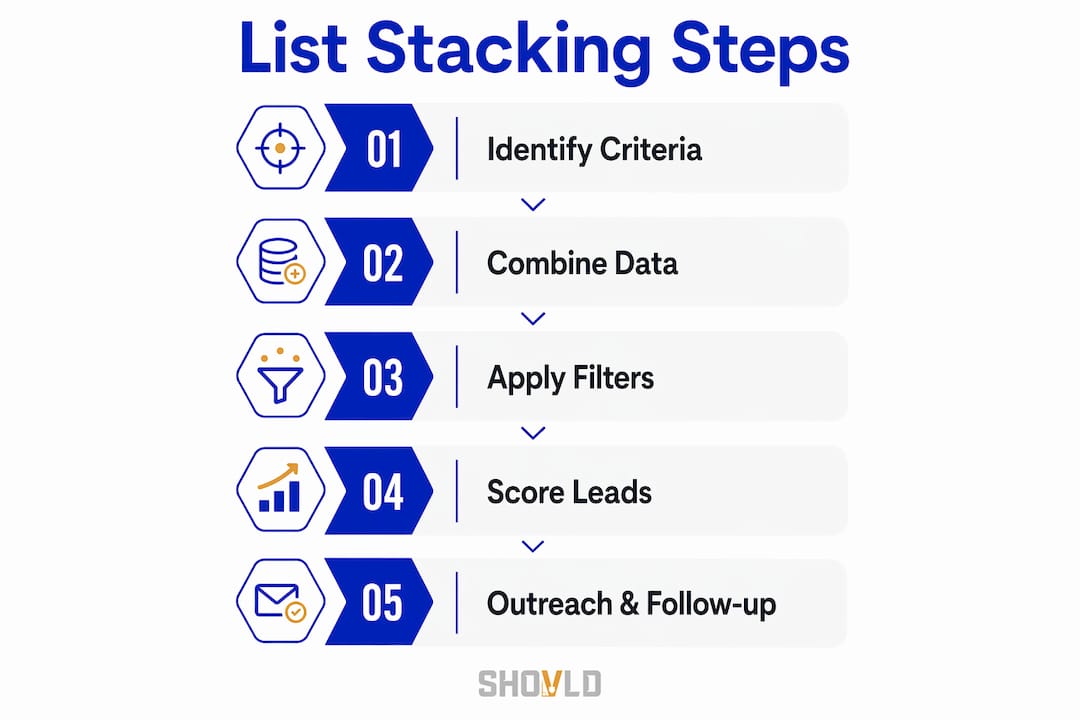
List stacking is the technique of overlapping multiple motivation criteria to isolate owners who appear on more than one distress list simultaneously. Combining multiple criteria dramatically improves direct mail response rates: two criteria yield a 2 to 3x improvement, three criteria yield 3 to 5x, and four or more criteria can produce a 5x or greater lift, though the list size shrinks accordingly. This is the highest-impact technique available for improving lead quality without increasing outreach volume.
Here is a practical step-by-step approach to building a stacked list:
Pull individual lists. Export your absentee owner list, tax delinquent list, and code violation list separately from a platform like PropStream or PropertyRadar.
Find overlaps. Use spreadsheet logic (List A AND List B) or platform filters to identify addresses that appear on two or more lists. These are your highest-priority contacts.
Apply tighter filters. Narrow by geography, property type, equity threshold, or ownership duration. An absentee owner with 40% equity who is also tax delinquent is a far stronger lead than either signal alone.
Score your leads. Assign a motivation score based on how many criteria each owner meets. A property flagging pre-foreclosure, vacancy, and code violations scores higher than one with only a single indicator.
Segment into tiers. Tier 1 leads (three or more criteria) get immediate outreach. Tier 2 leads (two criteria) enter a drip sequence. Tier 1 leads (single criteria) go into a long-term nurture list.
The table below illustrates how stacking changes both lead quality and expected volume:
Stack criteriaResponse rate improvementEstimated list size impactSingle criterionBaselineLargeTwo criteria2 to 3xModerateThree criteria3 to 5xSmallFour or more criteria5x or greaterVery small
Pro Tip: Use your data platform’s built-in filter logic to run the AND overlap automatically rather than merging spreadsheets manually. PropStream and PropertyRadar both support multi-criteria filtering that exports a pre-stacked list in minutes.
The goal is not the largest list. The goal is the list where every contact has a measurable reason to sell now.
What are effective outreach methods to connect with motivated sellers?
Once you have a stacked, scored list, outreach channel selection determines whether your leads convert. Motivated sellers prefer fast, hassle-free transactions with certainty, which means your messaging must lead with speed and simplicity, not price. The channels that work best for pre-listing seller strategies are direct mail, cold calling, SMS, and in-person networking.
Key considerations for each channel:
Direct mail. Handwritten-style postcards and yellow letters consistently outperform generic flyers. Mail to your Tier 1 stacked list first, then expand to Tier 2 after the first round of responses.
Cold calling and SMS. Both channels require strict TCPA compliance, including honoring the National Do Not Call Registry, obtaining prior express consent for automated messages, and respecting opt-out requests. Violations carry federal penalties of $500 to $1,500 per offense, making compliance a financial priority, not just a legal one.
Calling hours. TCPA rules tie permitted calling hours to the recipient’s time zone. Consent revocation must be honored in any reasonable manner, and your CRM should log every opt-out immediately.
Networking. Estate attorneys, probate judges’ offices, divorce attorneys, and property managers all encounter motivated sellers before those sellers ever consider listing. A referral relationship with one probate attorney can generate consistent deal flow for years.
Driving for dollars. Physical canvassing of target neighborhoods to spot distressed properties remains one of the most direct ways to identify motivated home sellers. Apps like DealMachine let you photograph a property and pull owner data on the spot.
Pro Tip: Automate consent tracking inside your CRM from day one. Tools like Podio or REI BlackBook let you log call consent, record opt-outs, and flag DNC contacts automatically, protecting you from TCPA exposure as your list scales.
How to build and maintain a motivated seller list for your strategy
Building a motivated seller list that actually produces deals requires aligning your data filters with your investment model. A wholesaler targeting quick assignments needs different criteria than a buy-and-hold investor looking for long-term rental acquisitions. A structured list-building workflow that pulls multiple lists, finds overlaps, and applies geography and equity filters produces the most actionable contacts.
Follow this workflow to build and maintain your list:
Define your investment criteria. Decide on target geography, property type (single-family, multifamily, commercial), minimum equity threshold, and price range before pulling any data.
Select motivation indicators. Choose three to five data sources relevant to your strategy. Fix-and-flip investors prioritize code violations and deferred maintenance. Wholesalers prioritize pre-foreclosure and tax delinquency. Buy-and-hold investors often target absentee owners with long ownership tenure.
Pull and clean your data. Export lists from PropStream or PropertyRadar, remove duplicates, and verify addresses. Bad data wastes outreach budget faster than any other variable.
Apply list stacking. Run your AND logic to find overlapping contacts and assign motivation scores as described above.
Segment and schedule outreach. Tier 1 contacts get a phone call within 48 hours. Tier 2 contacts enter a six-touch direct mail sequence over 90 days. Tier 3 contacts receive quarterly mail only.
Refresh your list monthly. New NOD filings, tax delinquency updates, and code violation records are added to county databases continuously. A list that is 90 days old is already losing accuracy.
The comparison below shows how investment strategy shapes list-building priorities:
Investment strategyTop motivation indicatorsKey filterWholesalingPre-foreclosure, tax delinquencyEquity above 30%Fix-and-flipCode violations, deferred maintenanceARV-to-purchase ratioBuy-and-holdAbsentee ownership, long tenureCash flow potential
Finding undervalued properties needing work follows the same logic: the data signals that indicate a motivated seller also indicate a property priced below its potential.
What additional strategies complement list-based seller identification?
List stacking is the core engine, but the investors who build the most consistent pipelines layer in complementary tactics that capture sellers the data does not yet reflect. Combining outbound data-driven prospecting with inbound digital marketing generates a sustainable seller pipeline that does not depend entirely on any single channel.
Effective complementary strategies include:
Driving for dollars. Mobile apps integrated with data providers let you photograph a distressed property, pull the owner’s contact information, and add them to your outreach sequence in under two minutes. This captures properties that have not yet triggered a public record event.
Networking with professionals. Estate attorneys, divorce lawyers, and property managers encounter motivated sellers weeks or months before a listing decision. A single referral relationship with a probate attorney in a mid-size market can generate five to ten qualified leads per month.
Inbound SEO and PPC. Sellers actively searching for “sell my house fast” or “cash home buyers in [city]” are already motivated. A landing page optimized for these terms, backed by Google Ads, captures inbound leads who self-identify their urgency.
Expired listings and FSBOs. Properties that failed to sell through a traditional agent, or owners attempting to sell without one, signal frustration with the conventional process. These sellers are often ready to consider an off-market offer.
Bandit signs and local visibility. Physical signs in high-traffic areas of your target market generate inbound calls from sellers who are not yet in any database. The cost per lead is low, and the motivation level of callers is typically high.
Pre-market property opportunities require a multi-channel approach because no single tactic captures every motivated seller. The investors who win consistently are the ones who show up across multiple touchpoints before the listing goes live.
Key takeaways
Finding motivated sellers before listing requires combining public record data, list stacking, and compliant multi-channel outreach into a repeatable workflow.
PointDetailsData sources drive lead qualityPre-foreclosure, tax delinquency, probate, and code violations are the strongest motivation signals.List stacking multiplies resultsOverlapping three or more criteria can improve response rates by 3 to 5x compared to single-criterion lists.Compliance is non-negotiableTCPA violations carry penalties of $500 to $1,500 per offense; log consent and opt-outs from day one.Strategy shapes your filtersWholesalers, fix-and-flip investors, and buy-and-hold buyers each need different motivation indicators and equity thresholds.Complementary tactics fill the gapsDriving for dollars, professional networking, and inbound SEO capture sellers that public records have not yet flagged.
Why data quality beats list size every time
After working with investors across multiple markets, the pattern is consistent: the investors who struggle are not the ones with small lists. They are the ones with large, undifferentiated lists and no stacking logic behind them. Broad targeting feels productive because the volume is high. It is actually the trap. You spend outreach budget on owners with no real urgency, and the few motivated sellers buried in the list never get the attention they deserve.
The investors who close deals consistently treat their list as a scored asset, not a contact database. They know that true motivation is confirmed in conversation, not in the data. The data gets you to the door. Listening to a seller’s timeline and circumstances is what closes the deal. A pre-foreclosure filing tells you there is pressure. A five-minute phone call tells you whether that pressure is real and immediate.
The other mistake I see constantly is treating compliance as a legal formality rather than a business practice. TCPA compliance protects your long-term ability to run outreach campaigns. One batch of unconsented SMS messages can generate complaints that shut down your phone number and expose you to penalties that wipe out months of deal profit. Build the compliance infrastructure before you scale, not after.
The best pre-listing seller strategies combine signal intelligence from public records, disciplined list stacking, and outreach that respects the seller’s situation. That combination is not complicated. It is just not how most investors operate, which is exactly why it works.
— Avi
How Shovld helps you act before the market reacts
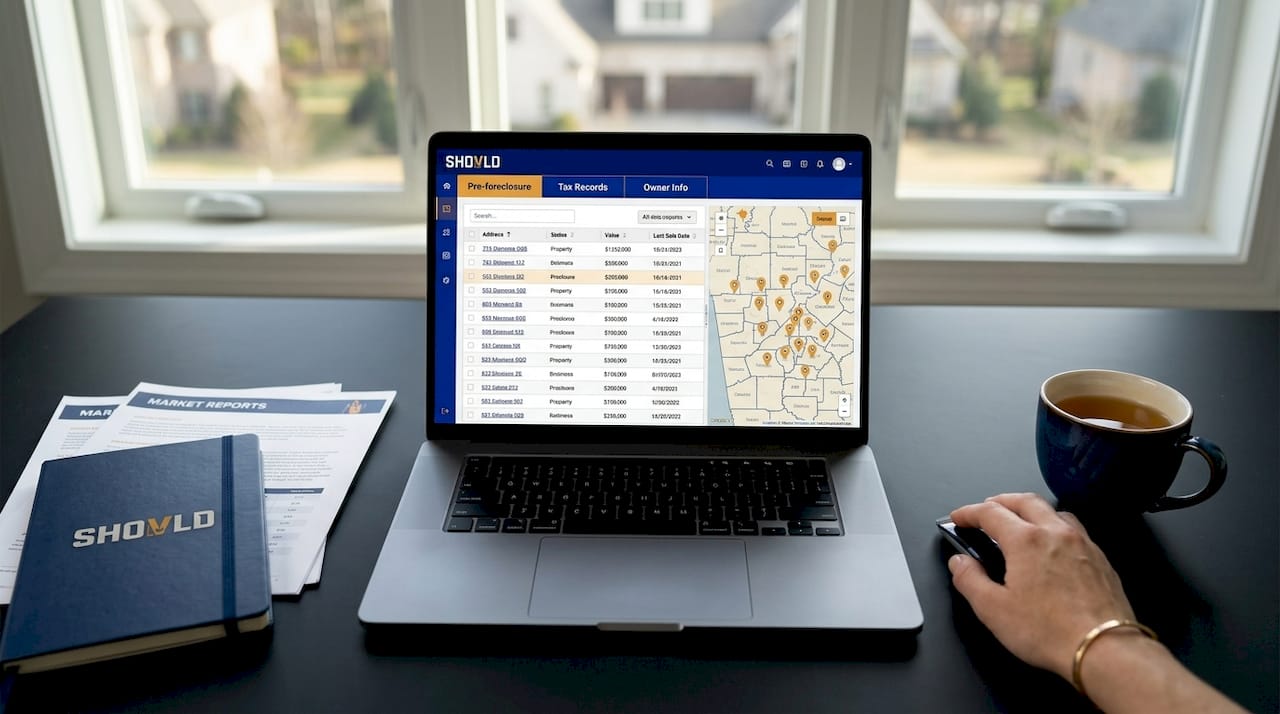
Shovld is built specifically for investors and real estate professionals who want to identify pre-market opportunities before they become crowded. The platform tracks permits, code violations, tax delinquency, HOA pressure, and other public-record signals across multiple U.S. markets, scoring each property so you know where to focus first.

Rather than pulling raw data from county websites and merging spreadsheets manually, Shovld delivers verified, scored opportunities directly to your workflow. The platform’s signal intelligence approach mirrors the list stacking logic described in this article, but automates the overlap detection and prioritization. Explore Shovld’s platform capabilities to see how it maps to your investment strategy, or review current pricing plans to find the tier that fits your market coverage needs.
FAQ
What makes a seller “motivated” in real estate?
A motivated seller is a property owner with a time-sensitive reason to sell, such as pre-foreclosure, tax delinquency, probate, or relocation. These sellers typically prioritize speed and certainty over achieving the highest possible sale price.
How many motivation criteria should I stack for the best results?
Stacking three or more criteria produces a 3 to 5x improvement in direct mail response rates compared to single-criterion lists. Four or more criteria can yield 5x or greater improvement, though the resulting list will be significantly smaller.
Is cold calling or SMS outreach to motivated sellers legal?
Both channels are legal but require strict TCPA compliance, including honoring the National Do Not Call Registry and obtaining prior express consent for automated messages. Violations carry federal penalties of $500 to $1,500 per individual offense.
How often should I refresh my motivated seller list?
Monthly refreshes are the minimum standard because new NOD filings, tax delinquency updates, and code violation records are added to county databases continuously. A list older than 90 days loses meaningful accuracy and wastes outreach budget.
What is the fastest way to find motivated sellers before listing?
The fastest method combines a stacked list from PropStream or PropertyRadar with immediate phone outreach to Tier 1 contacts, defined as owners appearing on three or more distress lists simultaneously. Driving for dollars in your target neighborhood captures additional sellers that public records have not yet flagged.