
Why Off-Market Properties Outperform Listed Ones
Off-market properties, known in the industry as pocket listings, consistently achieve higher sale prices and faster closings than publicly listed homes because they eliminate the two forces that most damage seller outcomes: visible price reduction history and unqualified buyer traffic. A Dallas–Fort Worth study analyzing over 700,000 home sales found that off-market homes sold for roughly a 1.7% price premium over comparable listed properties, with 20% fewer price reductions. Compass research confirmed the pattern, showing pre-marketed homes closed at 2.9% higher prices and received accepted offers 20% faster than direct MLS listings. These are not outliers. They reflect a structural advantage built into how off-market deals are constructed. The one important nuance: NAR’s Clear Cooperation Policy, revised in both 2020 and 2025, has reshaped how long sellers can operate off-market before MLS exposure is required, and that timing window directly affects how large the premium can grow.
Why off-market properties outperform listed ones
The core mechanism behind off-market outperformance is not secrecy. It is leverage control. When a property appears on the MLS, every buyer can see how long it has sat, how many times the price dropped, and how many showings it has had. That data becomes a negotiation weapon for buyers. Off-market deals strip that weapon away.

The off-market price advantage comes specifically from limiting buyer leverage and eliminating visible price reductions. Sellers who avoid public listing preserve what practitioners call the “negotiation tax,” the discount buyers extract when they can point to stale days-on-market data or a price cut history. Without that data, buyers negotiate from a weaker position.
Three additional factors drive the performance gap:
Buyer qualification: Off-market buyers tend to be higher-intent and better-financed. They found the property through a network, not a Zillow scroll, which signals genuine motivation and reduces the risk of deals falling through.
Pricing momentum: Pre-marketing phases test price points and build demand before public activation, so when a listing does go live, it carries momentum rather than starting cold.
Speed correlation: Homes that went pending within seven days were 2.6 times more likely to sell above asking price, with 44.3% of fast-pending homes closing above list versus 17.1% for slower sales. Off-market deals, by targeting the right buyer from the start, consistently compress that timeline.
“Off-market tactics constitute a pricing experiment with a defined window to gather buyer feedback before public listing.” The sellers who treat the private phase with discipline, setting a hard stop before going public, capture the premium. Those who drift lose the leverage they were trying to protect.
How off-market vs listed properties perform across different segments
The performance gap between pocket listings and public MLS properties is not uniform. It scales with price point, market transparency, and local MLS rules.
SegmentOff-market premiumKey driverStandard residential (Dallas–Fort Worth)~1.7%Fewer price reductions, faster closePre-marketed homes (Compass data)~2.9%Pricing momentum, qualified buyersLuxury Swiss properties (above CHF 10M)3–8%Discretion, curated buyer poolGreater Boston market-3.8% (discount)Reduced exposure, thin buyer pool
In the luxury segment, the advantages of off-market properties are most pronounced. Swiss luxury off-market transactions achieve 3 to 8% price premiums and spend 60% less time from viewing to contract. Over 50% of Swiss transactions above CHF 10 million occur entirely off-market. The reason is structural: ultra-high-net-worth buyers value discretion, and sellers in that tier can afford to wait for the right buyer rather than running a public auction.
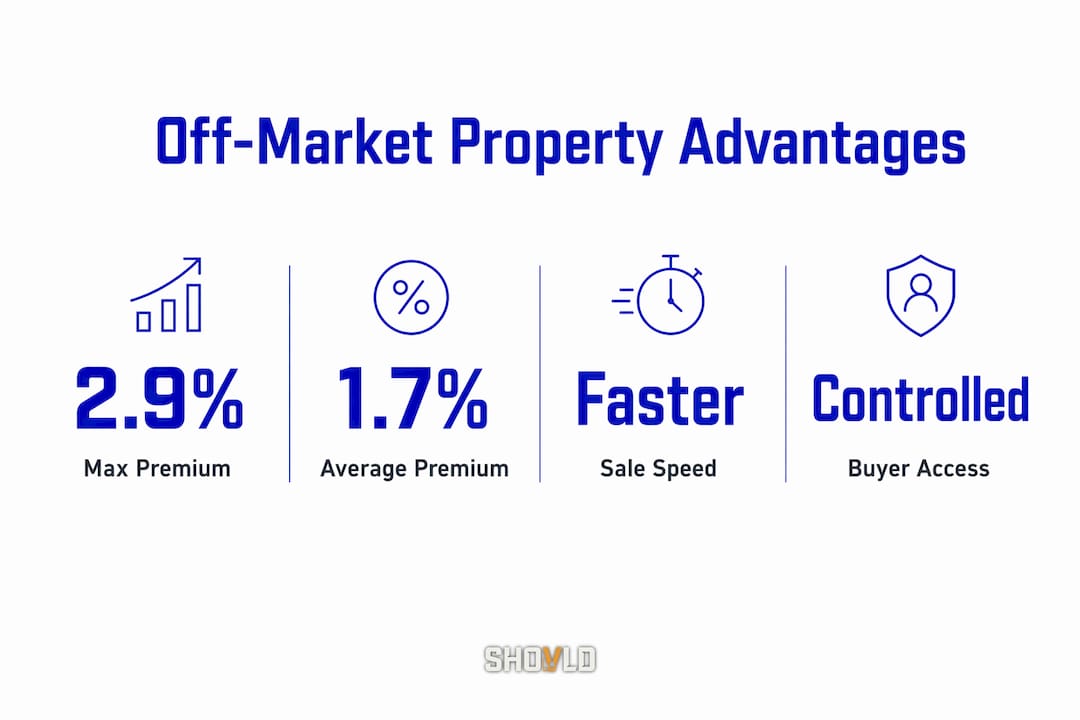
Standard residential markets tell a more mixed story. The Greater Boston market is the clearest counterexample, where off-market homes sold for 3.8% less on average than open-market listings. Boston’s high buyer competition and deep MLS liquidity mean that public exposure generates more competing offers, which drives prices up. Sellers who skip that competition leave money on the table.
The lesson is direct: off-market outperformance is strongest in thin or discretionary markets and weakest in high-demand, high-transparency markets where MLS exposure generates genuine bidding competition.
Pro Tip: Before choosing an off-market strategy, check your local market’s average days-on-market and list-to-sale price ratio. If homes in your zip code routinely sell above asking within 10 days, public listing likely generates more value than a private sale.
How to find off-market properties: practical strategies for investors
Accessing off-market deals requires a different playbook than browsing Zillow or Redfin. The supply does not come to you. You build the pipeline.
Agent networks and pocket listing relationships. The most reliable source of off-market inventory is a well-connected local agent who knows which sellers are considering a move before they list. Agents working with Compass, Sotheby’s International Realty, or boutique luxury brokerages often manage pre-market phases for sellers who want to test pricing quietly.
Pre-market and coming-soon platforms. Many MLS systems now allow a “coming soon” status that gives sellers a short window of off-market exposure before full public activation. Monitoring these windows gives buyers a first-mover advantage before competition arrives.
Public record signals. Tax delinquency filings, code violations, permit activity, and HOA pressure are early indicators that a property owner may be motivated to sell before a public listing. Platforms like Shovld track these distressed-property signals across U.S. markets, surfacing opportunities before they become crowded.
Direct outreach. Targeted letters or calls to owners of properties matching your investment criteria, particularly those showing deferred maintenance or long ownership tenure, can surface sellers who have not yet decided to list publicly.
Private investor networks. Real estate investment groups, REIA chapters, and private equity networks circulate off-market deals among members. Being present in these networks is a prerequisite for consistent off-market deal flow.
Pro Tip: The best off-market deals come from motivated sellers, not just willing ones. Look for sellers with a timing pressure: estate settlements, job relocations, or financial distress. Those conditions create the negotiation flexibility that makes off-market deals genuinely advantageous for buyers.
Curating off-market listings to fit the right buyer profile maximizes pricing advantage by focusing on offer quality and financing certainty rather than volume of interest. For buyers, that means presenting yourself as the right buyer, not just a willing one.
When listed properties outperform off-market ones
The benefits of buying off-market homes are real, but they are not universal. There are clear conditions under which public MLS listing produces better outcomes for sellers and, by extension, tougher conditions for off-market buyers.
High-demand, low-inventory markets. When buyer demand significantly exceeds supply, public listing triggers bidding wars that off-market deals cannot replicate. Greater Boston is the textbook case, but similar dynamics apply in markets like Austin, Nashville, and parts of the San Francisco Bay Area during peak demand cycles.
Properties needing transparent price discovery. Sellers who are uncertain about their property’s value benefit from public exposure. The MLS functions as a real-time pricing mechanism. Off-market sales, by limiting the buyer pool, can produce a price that reflects one buyer’s ceiling rather than the market’s actual ceiling.
Sellers with fairness obligations. Estate sales, divorce proceedings, and fiduciary-managed properties often require demonstrable market exposure to satisfy legal or ethical standards. Off-market sales in these contexts can create liability.
Thin agent networks. In markets or price segments where the agent network is not deep enough to surface qualified off-market buyers, private sales simply do not generate enough competition to protect the seller’s price.
The pattern is consistent: off-market outperformance requires a sufficiently deep and qualified private buyer pool. When that pool is shallow, public listing wins.
How recent policy changes affect off-market property performance
NAR’s Clear Cooperation Policy, first adopted in 2020, required MLS members to submit listings to the MLS within one business day of public marketing. The intent was to prevent agents from keeping listings private to double-end commissions. The effect on off-market premiums was measurable and immediate.
An academic economist tracking off-MLS sale premiums over 20 years found an average 1.7% premium for off-market sales, but noted the premium largely disappeared after the 2020 policy took effect. The policy shortened the private marketing window, and shorter private exposure directly reduced the premium that longer off-market periods had historically generated.
In 2025, NAR revised the policy again, allowing local MLS organizations more flexibility in setting their own rules. Some markets now permit extended pre-marketing windows. Others maintain strict one-day submission requirements. The result is a patchwork of local rules that makes off-market strategy highly location-dependent in 2026.
The practical implication for investors and buyers is clear: know your local MLS rules before building an off-market strategy. In markets where extended pre-marketing is permitted, the pricing control advantage of a private phase is fully available. In markets with strict submission timelines, the window is narrow and the strategy must be executed quickly.
Key takeaways
Off-market properties outperform listed ones when sellers control buyer exposure, target qualified buyers, and avoid the public pricing signals that give buyers negotiating leverage.
PointDetailsPrice premium is real but conditionalStudies show 1.7% to 2.9% premiums in favorable markets, but Greater Boston shows a 3.8% discount.Leverage control drives the advantageEliminating visible price reductions and days-on-market data protects seller negotiating position.Luxury segment benefits mostSwiss off-market luxury transactions achieve 3 to 8% premiums and close 60% faster.Policy changes reshaped the windowNAR’s Clear Cooperation Policy reduced premiums after 2020; 2025 revisions restored some local flexibility.Signal data finds deals earlyTracking permits, tax delinquency, and code violations surfaces motivated sellers before public listing.
The off-market edge is about timing, not secrecy
I have watched investors chase off-market deals as if the privacy itself were the asset. It is not. The asset is timing and buyer fit. The sellers who capture the largest premiums are not the ones who hide their properties the longest. They are the ones who identify the right buyer quickly, present a clean offer environment, and close before the deal gets stale.
The data from Dallas–Fort Worth, Compass, and the Swiss luxury market all point to the same conclusion: off-market works when the private phase is disciplined and time-bounded. Drift too long without a qualified buyer, and the deal loses momentum. The property starts to feel like it has a problem, even if it does not.
What I find most underused is the signal layer. Most investors wait for a seller to raise their hand. The smarter move is to read the signals before the hand goes up: a tax delinquency filing, a code violation, a permit pulled for a property that has been sitting. Those signals tell you who is under pressure before they know they are ready to sell. That is where the real off-market edge lives, not in a pocket listing network, but in pre-market opportunity identification before the competition even knows to look.
The 2026 market adds one more layer of complexity. With MLS rules varying by region and buyer demand uneven across metros, there is no single off-market playbook. The investors who win are the ones who know their local rules, have a qualified buyer or seller network in place, and can move fast when a signal appears.
— Avi
How Shovld helps you find off-market deals before the market does

Shovld is an AI-powered signal intelligence platform built for real estate investors, agents, and contractors who want to act before a property hits the MLS. The platform tracks permits, code violations, tax delinquency filings, HOA pressure, and deferred maintenance patterns across multiple U.S. markets, scoring each signal so you know which opportunities are worth pursuing and which are noise.
For investors focused on off-market real estate strategies, Shovld surfaces the motivated sellers and distressed properties that never appear on Zillow or Redfin. You get verified, scored opportunities before the market reacts. Explore Shovld’s intelligence plans to see which tier fits your market and deal volume, or visit getshovld.com to learn how the platform works.
FAQ
What is an off-market property?
An off-market property, also called a pocket listing, is a property sold without being publicly listed on the MLS or major portals like Zillow or Redfin. The sale occurs through private networks, agent relationships, or direct outreach.
Why do off-market properties often sell for more?
Off-market properties avoid visible price reduction history and days-on-market data, which buyers use to negotiate discounts. Studies from Dallas–Fort Worth and Compass show premiums of 1.7% to 2.9% when sellers control buyer exposure and target qualified buyers.
Are there situations where off-market sales produce lower prices?
Yes. In Greater Boston, off-market homes sold for 3.8% less on average than publicly listed homes. High-demand markets with deep MLS liquidity generate bidding competition that off-market deals cannot replicate.
How does the Clear Cooperation Policy affect off-market deals?
NAR’s Clear Cooperation Policy, adopted in 2020, shortened private marketing windows and reduced off-market premiums measurably. The 2025 revision gave local MLS organizations more flexibility, restoring some off-market opportunity in markets that allow extended pre-marketing.
How can investors find off-market properties consistently?
The most reliable methods are agent networks, coming-soon MLS windows, direct outreach to motivated sellers, and signal-based platforms like Shovld that track tax delinquency, permits, and code violations to identify distressed owners before they list publicly.