
How to Approach Sellers Before Wholesalers Do in 2026
Approaching sellers before wholesalers do is defined as making direct, personalized contact with motivated property owners before wholesale investors flood their inboxes with scripted pitches. The window is narrow. FSBO contact rates drop 40% after the first day a property hits the market, which means the investor who calls on day one operates in a completely different competitive environment than the one who calls on day three. The seller-first approach, the recognized industry term for this method, puts the owner’s needs at the center of every conversation from the first touchpoint. Investors who master this approach consistently secure deals before the crowd even knows the property exists.
Why timing and seller psychology determine who wins the deal
Speed alone does not win deals. The investor who calls first but leads with a pitch loses to the investor who calls second but leads with a genuine question about the seller’s situation.
FSBO sellers receive an average of 23 agent calls in their first week, but only 3 of those calls focus on understanding the seller’s situation first. That gap is the opportunity. Sellers remember the rare caller who asked what mattered to them, not the one who rattled off a cash offer before learning a single fact about the property.
Psychology-first communication means opening with curiosity, not credentials. Concise outreach calls under 47 seconds that focus on questions about the seller’s situation outperform pitch-heavy calls. Scripts built around seller pain points produce a 23% higher appointment rate than scripts built around investor benefits. That difference compounds across a pipeline of 50 or 100 leads.
Response time is the other half of the equation. Responding to a lead within 5 minutes dramatically increases the chance of making contact compared to waiting even 10 minutes. Sellers who list a property are often anxious and ready to talk. The investor who shows up in that window earns a conversation. The investor who shows up an hour later gets voicemail.
Lead with a question about the seller’s timeline or situation, not your offer price.
Keep the first call under one minute. Ask, listen, and schedule a follow-up.
Respond to new leads within 5 minutes whenever possible.
Track which sellers engaged and which did not before triggering any follow-up sequence.
Pro Tip: Open every first call with a single curiosity question: “I saw your property and I’m genuinely interested. Can I ask what’s prompting the sale?” That one question separates you from every scripted pitch the seller heard that day.
How to identify the right sellers before the competition does
Not every seller is motivated. Calling every property owner wastes time and burns goodwill. The investors who consistently beat wholesalers to the table prioritize their outreach based on signals that reveal genuine seller motivation.

The clearest motivation signals fall into three categories: speed, privacy, and succession. A seller who needs to close in 30 days is more motivated than one testing the market. A seller who avoids public listings values discretion. A seller managing an inherited property often wants a clean, fast exit over maximum price. Identifying which category a seller falls into before the first call shapes the entire conversation.
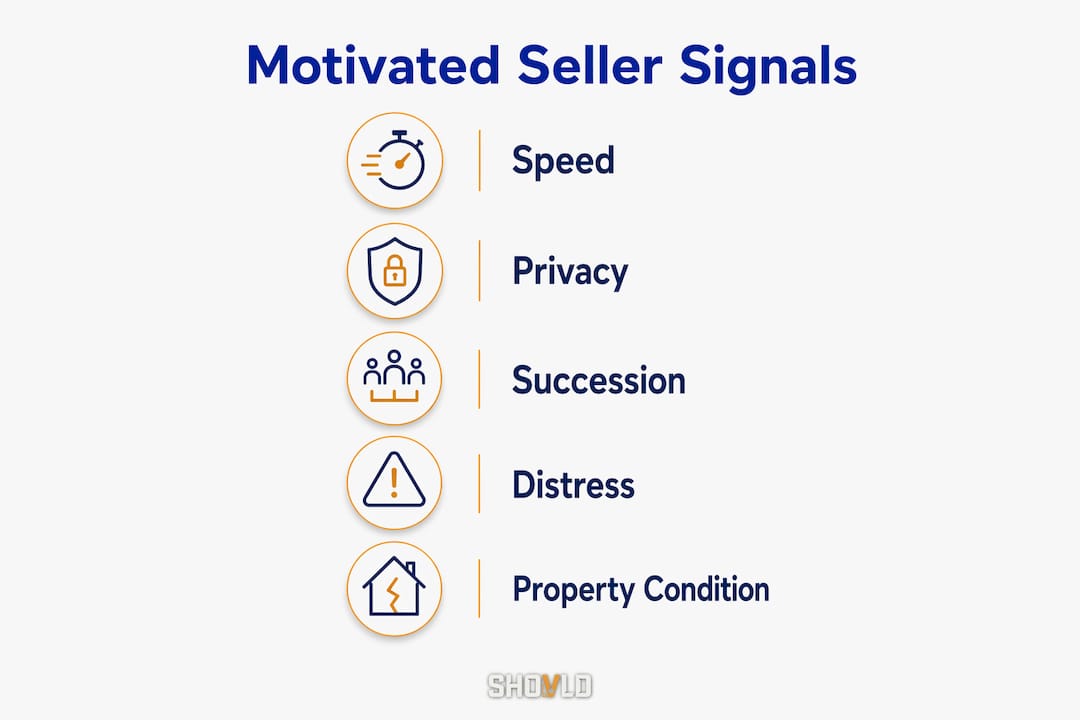
Distress scoring and property condition signals give investors a data-driven way to rank prospects. Properties showing deferred maintenance patterns, code violations, or HOA pressure are statistically more likely to have motivated sellers. Shovld tracks these public-record signals across multiple U.S. markets and scores them so investors can prioritize the highest-probability leads first.
The table below compares three common prioritization approaches and what each one actually tells you about seller motivation.
Prioritization signalWhat it revealsReliability for early outreachAge of listingProperty has not sold at asking priceModerate. Motivation grows over time but starts cold.Motivation signs (speed, privacy, succession)Owner has a specific need driving the saleHigh. Directly tied to seller urgency.Property distress indicatorsOwner may lack resources or capacity to maintainHigh. Correlates with willingness to accept off-market terms.Responsiveness to first contactSeller is actively engaged and open to conversationVery high. Real-time signal of deal readiness.
Investors who rely only on listing age are playing the same game as every wholesaler. Investors who layer in motivated seller property indicators reach a smaller, higher-quality pool of prospects and convert at a much higher rate.
Pro Tip: Build a short checklist of motivation signals before every outreach session. If a prospect hits two or more signals, move them to the top of your call list for that day.
What does a step-by-step early seller outreach process look like?
A repeatable outreach process is what separates investors who occasionally find deals from investors who build a predictable pipeline. The steps below reflect the seller-first deal process used by investors who consistently contact sellers first.
Research before you dial. Pull property records, permit history, and any available distress indicators before the first call. Know the property’s condition and the owner’s likely situation before you say a word.
Make the first call within 24 hours of identifying the lead. Contact rates drop sharply after day one. Speed is a competitive advantage, not a courtesy.
Open with a curiosity question, not a pitch. Ask about the seller’s timeline, their reason for selling, or what a good outcome looks like for them. Let the seller talk for the first 30 seconds.
Listen for motivation signals. Speed, privacy, and succession needs all surface in the first two minutes of a genuine conversation. Note them. They shape your offer structure later.
Match your communication style to the seller’s trust level. Sellers judge investors on a trust scale, and direct interaction outperforms sending brochures at advanced stages of engagement. Early in the relationship, keep it conversational. Do not send a packet of materials before the seller has invited that level of engagement.
Schedule a follow-up before ending the call. Confirm a specific time. Vague “I’ll call you next week” commitments dissolve.
Follow up with a human call first. No automatic follow-up should trigger before the seller shows interest. The sequence is: first call, then a human follow-up if there was engagement, then automation only to support stalled conversations.
Set the appointment and confirm the seller’s needs in writing. A brief summary email after the call reinforces trust and shows the seller you were listening.
Common mistakes at this stage include pitching a price before understanding the seller’s situation, using an overscripted call that sounds robotic, and failing to follow up after a seller shows initial interest. Each of these errors hands the deal to the next investor in line.
How do you stand out from wholesalers and handle seller skepticism?
Sellers who have been contacted by wholesalers before are often skeptical. They have heard the “fast cash, no hassle” pitch so many times it triggers defensiveness before you finish your first sentence. The way to cut through that is transparency, not a better pitch.
Leading with genuine buying interest rather than a sales pitch breaks through seller defensiveness and triggers curiosity. People are naturally more likely to return calls from buyers than from sellers. Framing yourself as someone who wants to buy, not someone who wants to sell a service, shifts the entire dynamic of the conversation.
Transparency also means being willing to say no early. The seller-first deal process treats transparency and early “no” decisions as trust-builders, not failures. If the numbers do not work, saying so clearly and quickly preserves the relationship for future deals. Sellers remember the investor who respected their time.
“At trust level 7, personal connection is the only product that matters.” This principle from the seller trust scale framework captures why brochures and automated messages fail at the moment a seller is ready to decide.
Do’s and don’ts for ethical, effective seller touchpoints:
Do ask about the seller’s situation before mentioning price.
Do honor your Letter of Intent. Treating an LOI as a firm agreement with no last-minute adjustments builds the kind of trust that generates referrals.
Do pivot after a rejection with a simple message: “I understand. If anything changes, I’d be glad to talk.”
Don’t send a brochure or marketing packet before the seller has invited that level of engagement.
Don’t retrade on price after the seller has accepted your offer. Aggressive last-minute adjustments destroy trust and kill deals.
Don’t automate follow-up before the seller has shown interest. Unsolicited automated messages read as spam and close doors permanently.
Key Takeaways
Investors who contact sellers first and lead with genuine curiosity about the seller’s situation consistently outperform those who rely on scripted pitches and volume-based outreach.
PointDetailsSpeed is a competitive edgeContact rates drop 40% after day one, so reaching sellers within 24 hours is non-negotiable.Psychology beats pitchCalls under 47 seconds focused on seller needs produce 23% higher appointment rates than benefit-heavy scripts.Prioritize by motivation signalsSpeed, privacy, and succession needs reveal true seller urgency better than listing age alone.Trust dictates communication styleMatch your outreach format to where the seller sits on the trust scale. Brochures fail at high trust levels.Automate last, not firstHuman conversation must come before any automated follow-up sequence is triggered.
My honest read on the seller-first approach
I have watched investors with smaller budgets and fewer contacts consistently outperform well-funded competitors, and the pattern is always the same. The investors who win early are the ones who treat the first call as a listening session, not a sales meeting.
The trust scale concept resonates because it reflects how real relationships work. You do not hand someone your resume the moment you meet them. You ask a question. You listen. You earn the right to share more. Sellers respond to that instinct because almost no one in this market practices it. Wholesalers are crowded around the same fire, running the same script, and sellers can feel it.
What I find most underestimated is the value of saying no clearly and early. Investors who walk away from deals that do not fit, and do so with honesty, build a reputation that brings sellers back. That reputation is worth more than any single transaction. The seller-first deal process is not just an outreach tactic. It is a long-term positioning strategy that compounds over time.
The investors I respect most are not the fastest dialers. They are the ones who ask better questions and then actually listen to the answers.
— Avi
How Shovld helps investors reach motivated sellers first
Shovld gives real estate investors a concrete advantage in early seller outreach by surfacing motivated seller signals before a property ever hits the open market. The platform tracks permits, code violations, deferred maintenance patterns, HOA pressure, and other public-record indicators across multiple U.S. markets. Each signal is scored so investors can focus their outreach on the highest-probability leads, not a cold list of addresses.
For investors who want to build a predictable pipeline of off-market deals, Shovld removes the guesswork from prioritization. You spend less time cold-calling unmotivated owners and more time having real conversations with sellers who are ready to move. Review the Shovld pricing plans to find the tier that fits your market size and outreach volume.
FAQ
Why do contact rates drop so fast after day one?
FSBO contact rates drop 40% after the first day because sellers receive the most outreach volume immediately after listing and quickly become selective about who they respond to. Investors who call on day one reach a seller who is still open and engaged.
What is the seller trust scale?
The seller trust scale is a framework that describes how much credibility a seller assigns to an investor at each stage of engagement. Personal connection outperforms brochures once a seller invites the investor into a real conversation, making direct human interaction the only effective tool at higher trust levels.
When should I start automated follow-up?
Automation should only begin after a seller has shown genuine interest through a response or conversation. No follow-up phase exists until the seller engages. The sequence is first call, then a human follow-up, then automation only to support stalled conversations.
How do I differentiate myself from a typical wholesaler?
Lead with a question about the seller’s situation rather than a cash offer. Genuine buying interest breaks through the defensiveness sellers develop after repeated wholesale pitches and positions you as a buyer, not a middleman.
What motivation signals should I look for before the first call?
The three strongest signals are speed of sale needed, desire for privacy, and succession or estate situations. Properties showing distress indicators like code violations or deferred maintenance also correlate strongly with seller motivation and willingness to accept off-market terms.