
What Is a Verified Off-Market Lead for Investors?
A verified off-market lead is a property opportunity confirmed to have a motivated seller, a preliminary agreed price, and basic eligibility checks completed before deal details are shared with qualified buyers. Unlike a standard MLS listing, this type of lead never hits the public market. Off-market properties move through private investor networks, pocket listings, and direct seller channels, which means less competition and, often, better pricing. The verification layer is what separates a serious opportunity from a speculative contact. Approximately 10% or more of U.S. home sales happen entirely off MLS each year, and the investors who consistently win those deals are the ones who understand what “verified” actually means before they act.
What is a verified off-market lead and how does it work?
A verified off-market lead is the industry’s answer to a persistent problem: too many leads, too little signal. Lead verification is defined as the process of validating lead information, motivation signals, and eligibility to filter out non-serious inquiries and maximize deal quality. In real estate investing, that definition gets applied to sellers who have not listed publicly but have demonstrated genuine intent to transact.
The term “off-market listing” or “pocket listing” is the recognized industry vocabulary for the property side of this equation. “Verified off-market lead” describes the same opportunity after it has passed through a structured screening process. Both terms are used in practice, and understanding the distinction matters because verification is a process, not a property type.

What makes a lead “verified” rather than simply “off-market” comes down to four core criteria. The seller must demonstrate genuine motivation, not just curiosity about their property’s value. A preliminary price framework must be agreed upon, subject to contract and buyer due diligence. A defined timeline for completing the transaction must exist. Basic property checks, covering occupancy status, obvious title flags, and visible condition, must be completed before the deal is shared with buyers.
Verification also runs in both directions. Platforms that specialize in verified BMV opportunities confirm seller readiness and screen buyers to confirm funding and deal fit before granting access. This two-sided process protects motivated sellers from unvetted inquiries and gives serious buyers priority access to the best deals.
What does the verification process for off-market leads typically include?
The verification process is more structured than most investors expect. It is not a single phone call or a quick data pull. Platforms and networks that handle verified off-market leads typically follow a multi-step framework before a deal reaches a buyer’s inbox.
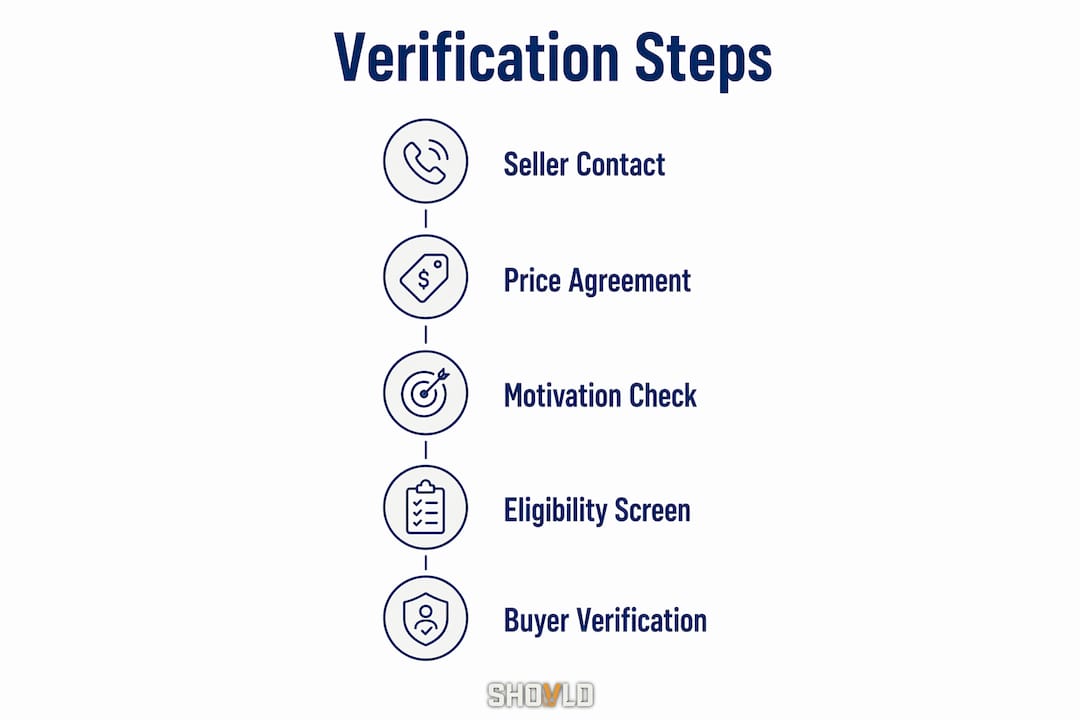
Here is how a standard verification sequence typically unfolds:
Seller motivation confirmation. The seller is interviewed to establish genuine intent to sell, not just a willingness to consider an offer. Curiosity is screened out at this stage.
Preliminary price agreement. A price or pricing framework is agreed upon, always subject to contract and full buyer due diligence. This prevents wasted negotiation time on both sides.
Timeline definition. A realistic completion window is established. Sellers with no urgency are flagged differently from those with a defined need to close within 30 to 90 days.
Basic property checks. High-level checks cover occupancy status, obvious title issues, and visible property condition. This is not a full inspection or title search. It is a triage step.
Buyer-side verification. Before deal details are released, buyers are screened to confirm funding availability and deal criteria. Buyer verification can take up to 72 hours on structured platforms, which means investors who prepare their funding documentation in advance gain a real timing advantage.
Deal release to qualified buyers. Only after both sides pass screening does the deal get shared. This sequencing is what gives verified leads their quality premium.
Pro Tip: Prepare a one-page buyer profile that includes your funding source, target property criteria, and typical closing timeline. Platforms that run buyer verification will move you through the queue faster when this information is ready upfront.
The verification process is a quality control step, not a legal guarantee. Full legal due diligence, including title searches, lien checks, and property inspections, remains the buyer’s responsibility after offer acceptance. Treating verification as a shortcut to skipping diligence is the fastest way to get burned on an off-market deal.
How do verified off-market leads compare to unverified or traditional leads?
The difference between a verified lead and an unverified one is not subtle. Unverified off-market leads are raw contacts: a distressed property owner who responded to a mailer, a name pulled from a skip-trace database, or a referral with no confirmed seller intent. These leads require significant follow-up investment before you know whether a deal is even possible. Consistent follow-up across five to twelve contact attempts is often required to convert raw off-market leads into contracts. That is a real cost in time and resources.
Verified leads compress that process. The seller motivation, pricing framework, and basic property checks are already done. You are entering the conversation at a later, higher-quality stage.
Lead TypeCompetition LevelSeller MotivationPricing ClarityTime to EvaluateVerified off-marketLowConfirmedPreliminary agreedFastUnverified off-marketLow to mediumUnknownNoneSlowMLS listingHighAssumedListed priceModerate
The table above shows why verified leads command attention from serious investors. MLS listings offer pricing transparency but arrive with maximum competition. Unverified off-market leads offer exclusivity but require heavy qualification work. Verified off-market leads sit at the intersection of exclusivity and confirmed quality.
That said, verified leads carry their own limitations:
Verification confirms motivation and eligibility signals. It does not confirm clean title, accurate valuation, or structural condition.
Verified status can expire. A seller who was motivated three weeks ago may have changed their mind or accepted another offer.
Buyer verification requirements mean you need your funding and criteria documentation ready before you can access the best deals.
The practical takeaway is that verified leads reduce wasted effort and increase conversion probability, but they do not replace buyer diligence. They are a filter, not a guarantee.
What practical strategies can investors use to identify and work with verified off-market leads?
Sourcing verified off-market leads requires a combination of relationship capital, technology, and process discipline. Investors who treat this as a one-time tactic rather than a repeatable system consistently underperform those who build structured pipelines.
The most reliable sourcing channels include:
Investor networks and agent relationships. Agents who specialize in pocket listings and distressed properties often have access to pre-verified seller contacts. Building relationships with these professionals before you need a deal is the only way to get early access.
Technology platforms. Tools like DealMachine and PropStream provide data-driven outreach capabilities, skip tracing, and property status indicators that help investors identify motivated sellers before they list publicly. Shovld takes this further by tracking permit activity, code violations, HOA pressure, and distressed-property signals across U.S. markets to surface opportunities before they become crowded.
Direct mail and targeted outreach. Campaigns targeting specific distressed property indicators, such as deferred maintenance patterns or municipal code violations, reach sellers who have not yet decided to list. This is where finding motivated sellers before a listing exists creates the most leverage.
CRM integration. Every off-market contact should enter a structured follow-up sequence. Automated follow-up systems reduce the risk of losing a deal simply because a competitor followed up on the seventh attempt while you stopped at the third.
Pro Tip: When approaching a platform or network that runs buyer verification, submit your proof of funds and deal criteria before you start browsing deals. Verified buyer status often determines who gets first access to new opportunities, not just who responds fastest.
The investors who win consistently in off-market deal flow are not the ones with the most leads. They are the ones with the most prepared pipelines. Buyer verification is a two-way street, and your readiness to transact is as important as the seller’s readiness to sell.
What are common misconceptions about verification in off-market leads?
The most damaging misconception is that “verified” means “safe to buy without further investigation.” It does not. Verification validates motivation and eligibility signals. It does not replace the buyer’s legal due diligence, which happens after offer acceptance through a title company, attorney, or escrow process.
A second common misunderstanding is that verification is a seller-only process. In practice, the most effective verification frameworks screen both sides of the transaction. Buyer verification confirms that the buyer is funded, proceedable, and a genuine fit for the deal before deal details are released. This protects sellers from time-wasters and ensures that verified buyers get priority access to the best opportunities.
“Verification is a quality contract step, not a legal guarantee. Full buyer due diligence, including title searches, lien checks, and property inspections, remains the buyer’s responsibility after offer acceptance.” — Best BMV Deals verification framework
Timing is another nuance that investors frequently underestimate. A verified lead has a shelf life. Seller circumstances change, competing buyers move quickly, and deals that were available on Monday may be under contract by Thursday. The verification status tells you the deal was real at the time of screening. It does not freeze the opportunity in place while you deliberate.
Finally, verification is not a standardized process across the industry. Different platforms, networks, and brokers apply different criteria and rigor levels. When evaluating a verified lead from any source, ask specifically what the verification covered: seller interview, price agreement, title flag check, buyer screening. The answer tells you exactly how much additional work you need to do before making an offer.
Key takeaways
Verified off-market leads give investors confirmed seller motivation, preliminary pricing, and basic eligibility screening before deal exposure, making them the highest-signal opportunity type in real estate investing.
PointDetailsVerification is multi-partyBoth seller readiness and buyer funding are confirmed before deal details are released.Not a legal guaranteeBuyer due diligence on title, liens, and condition remains required after offer acceptance.Leads have a shelf lifeVerified status reflects conditions at screening time; deals move fast in off-market networks.Buyer preparation mattersHaving proof of funds and deal criteria ready unlocks priority access on verified platforms.Technology accelerates sourcingPlatforms like Shovld, DealMachine, and PropStream surface distressed signals before sellers list publicly.
Why verification alone won’t make you a better investor
I’ve watched investors treat “verified” like a permission slip to skip their homework, and it costs them every time. The verification framework is genuinely useful. It filters out the noise, confirms seller intent, and gets you to a real conversation faster. But the investors I’ve seen build consistent deal flow treat verification as the starting line, not the finish line.
The more interesting insight is on the buyer side. Most investors focus entirely on finding verified sellers and almost none of their energy on becoming a verified buyer. Platforms that run structured screening processes give priority access to buyers who have their funding documented, their criteria defined, and their timelines confirmed. If you’re not prepared to pass that screen, you’re competing for the same deals as everyone else, even in an off-market network.
The other thing I’d push back on is the assumption that more leads equals more deals. Pre-market property opportunities reward investors who move with precision, not volume. One verified lead you’re fully prepared to act on beats ten unverified contacts you’re still qualifying three weeks later. Build the pipeline, prepare the buyer profile, and treat verification as a signal worth respecting, not a shortcut worth exploiting.
— Avi
How Shovld helps you find verified opportunities first

Shovld is built for investors who want to act before the market reacts. The platform tracks permits, code violations, HOA pressure, deferred maintenance patterns, and distressed-property indicators across U.S. markets, transforming scattered public records into scored, early-stage opportunities. Instead of chasing leads that are already crowded, Shovld surfaces the signals that predict motivated sellers before they decide to list. For investors who want a structured, data-driven approach to off-market lead sourcing, Shovld’s plans are built to match different deal volumes and market coverage needs. Explore Shovld’s pricing plans to find the right fit for your investment pipeline.
FAQ
What makes an off-market lead “verified”?
A verified off-market lead has confirmed seller motivation, a preliminary agreed price subject to contract, a defined transaction timeline, and basic property checks completed before deal details are shared with buyers. Verification is a quality screening step, not a legal guarantee.
How long does buyer verification typically take?
Buyer verification on structured off-market platforms can take up to 72 hours, depending on the platform’s process. Investors who submit proof of funds and deal criteria in advance move through the queue faster.
Do verified off-market leads replace due diligence?
No. Verification validates motivation and eligibility signals but does not cover title searches, lien checks, or property inspections. Full legal due diligence remains the buyer’s responsibility after offer acceptance.
What tools help investors identify off-market leads?
Platforms like DealMachine, PropStream, and Shovld help investors source off-market opportunities by tracking distressed-property signals and property data before sellers list publicly. Each platform applies different data sources and scoring methods.
How many follow-up attempts does it take to convert an off-market lead?
Raw unverified off-market leads often require five to twelve follow-up attempts before converting to a contract. Verified leads compress this timeline because seller motivation is already confirmed at the point of first contact.