
Top 5 Landfinder.ai Alternatives for 2026
Getting early, actionable signals on property opportunities before competitors rush the same lead pools creates pressure for real estate teams. Most tools either gate real time signals behind per lead charges or push teams toward manual research across fragmented sources. This comparison covers AI scoring, signal coverage, and pricing among five alternatives so contractors and investors can match a platform to their outreach needs.
Table of Contents
Shovld
At a Glance
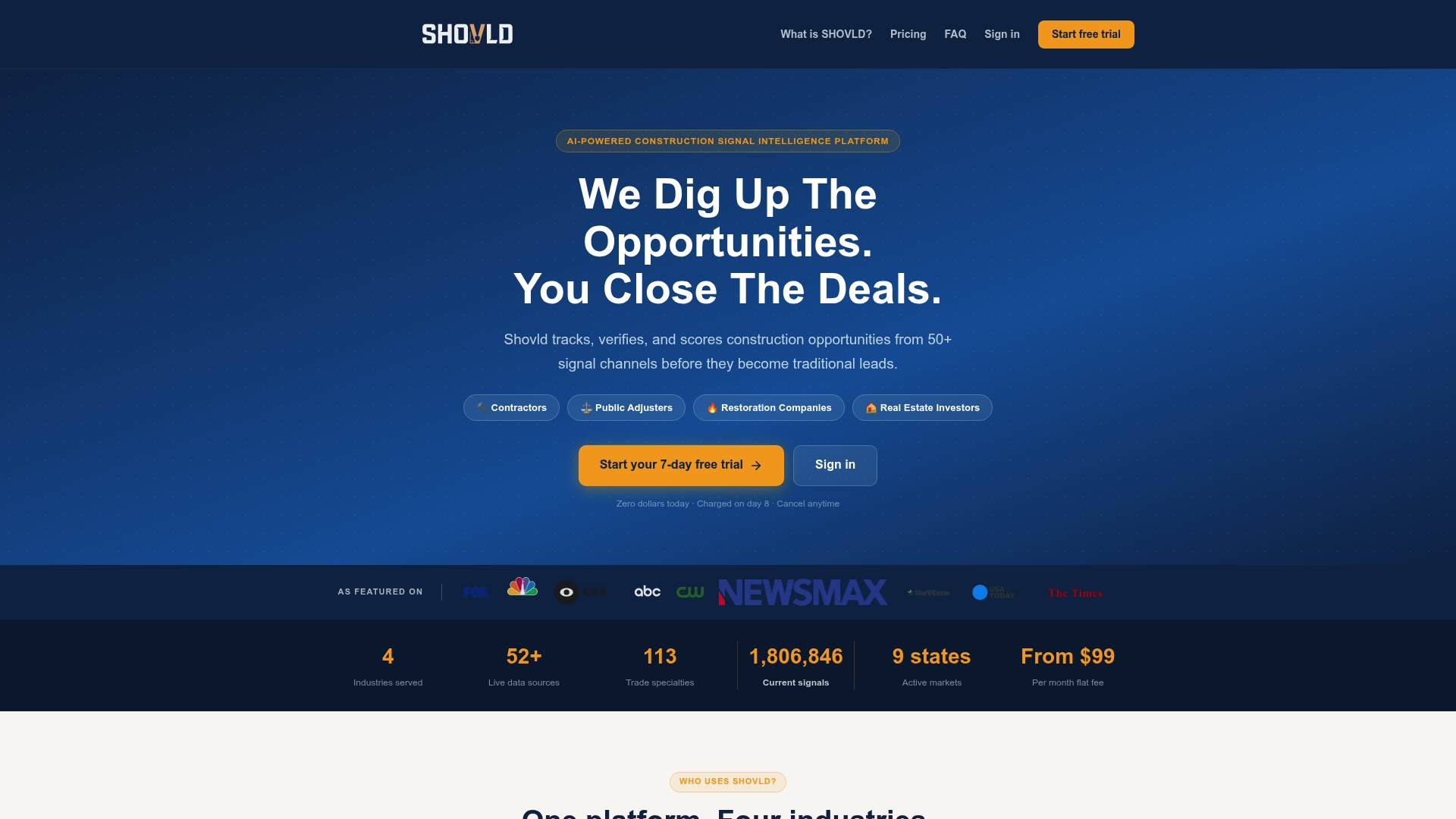
Shovld reports it monitors more than 50 real time sources for construction and property signals. The platform focuses on early stage opportunities for contractors, public adjusters, restoration companies, and real estate investors. Pricing is flat monthly with unlimited signals and no per lead charges.
Core Features
Shovld collects permits, storm damage alerts, code violations, HOA minutes, municipal records, distressed property indicators, and deferred maintenance patterns across multiple U.S. markets. The system delivers verified signals into a dashboard and uses AI scored prioritization on a 1–10 scale to rank urgency and relevance. Subscription plans include pre written outreach templates in five languages plus a pipeline CRM and appointment scheduling tools.
Key Differentiator
The vendor advertises verified, AI scored signals pulled from more than 50 real time sources and organized by industry, trade, and geographic market. That signal feed comes without per lead charges or bidding fees, which changes how teams budget outreach.
Pros
Shovld surfaces early construction and property signals before homeowners search or traditional lead sources surface projects, which creates a timing advantage for outreach. The flat monthly fee removes per lead charges and bidding wars, giving teams predictable spend for unlimited signals. Organized feeds by industry, trade, and market plus AI scoring help you focus on high urgency opportunities, and included outreach templates and CRM features shorten the path from lead to appointment.
Cons
The vendor reports coverage in nine states, so national campaigns require confirmation of local availability.
Notable Integrations
Pipeline CRM
Appointment booking tools
Who It’s For
Shovld fits contractors, restoration firms, public adjusters, and real estate investors who want earlier visibility into property opportunities. Teams that perform proactive outreach and can act quickly on a signal will extract the most value. Firms seeking per lead billing alternatives will appreciate the predictable monthly cost.
Unique Value Proposition
Flat monthly pricing with unlimited signals removes per lead charges and bidding fees and makes outreach spend predictable. That pricing model changes sales cadence for teams that call before projects escalate into crowded bids. For small contractors and adjuster shops, predictable cost lowers the barrier to sustained prospecting.
Real World Use Case
A roofing contractor receives a storm alert minutes after a severe event and sees a verified permit and a high score. They use a pre written outreach template and the built in appointment tool to call the homeowner within the same day. The contractor reaches a decision maker before competitors arrive and books the inspection.
Pricing
Plans start at $99/month for contractors and real estate investors and start at $149/month for public adjusters and restoration companies. A seven day free trial is available and the vendor offers discounts for annual billing.
Website: https://getshovld.com
Acres
At a Glance
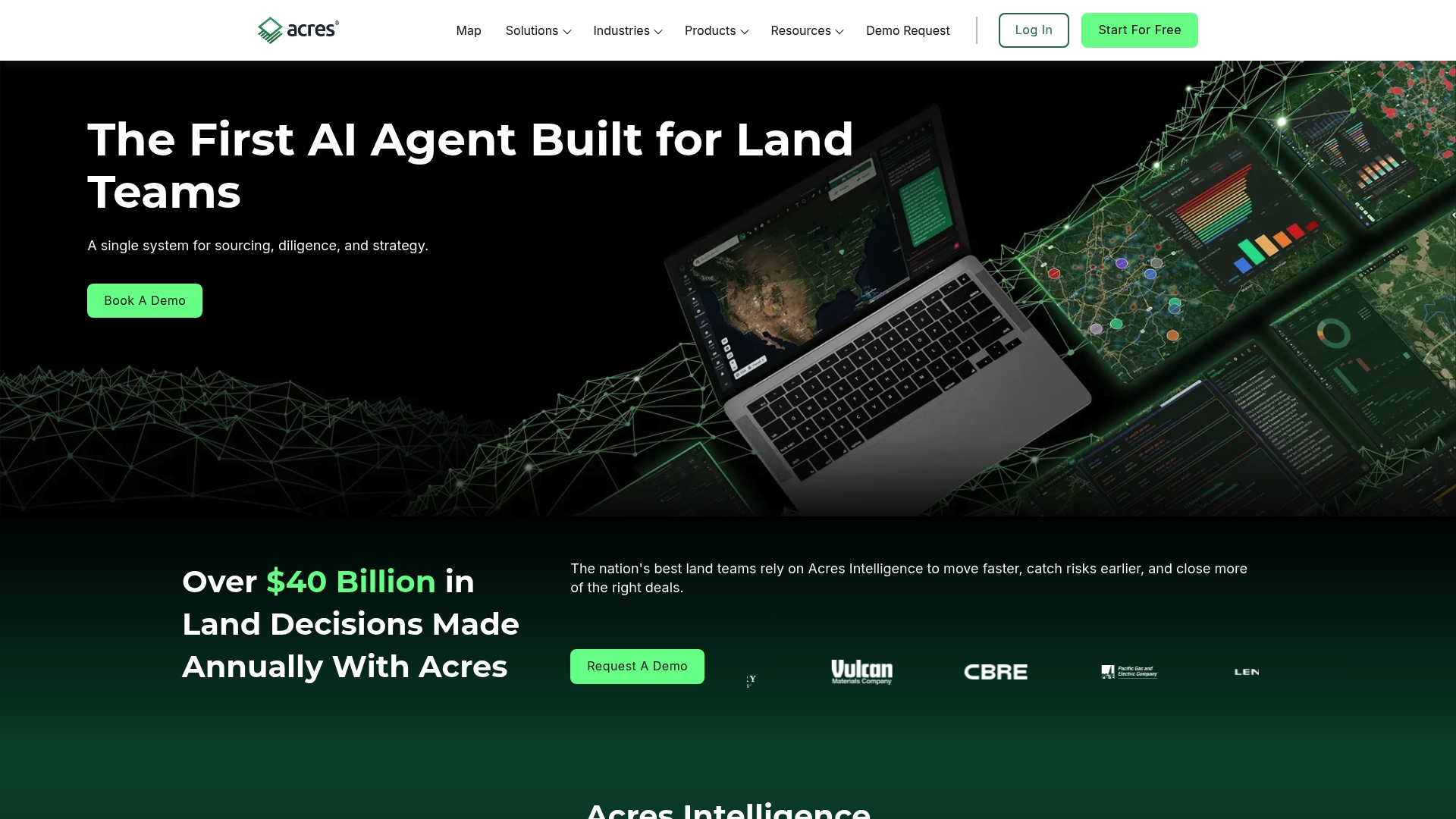
Acres reports over 150 million parcel records and 45 million land transactions in its database. That scale gives land teams broad historical context for pricing and comparables. The dataset aims to speed early screening for acquisition and development opportunities.
Core Features
Acres centralizes parcel ownership, recent land sales, and layered GIS data into a single interactive map interface. The platform pairs mapping with AI driven insights for instant valuations, aggregated parcel details, and automated risk flags. Teams can build custom reports, share portfolios, add comments, and manage documents inside the system.
Key Differentiator
The vendor advertises a combined offering of AI driven land valuation, nationwide land sale records, and unified mapping tailored to land teams. That combination is positioned to reduce time spent stitching public records and GIS layers across different tools. The claim targets acquisition and development groups that need both scaled data and collaborative workflows.
Pros
Acres packs a very large land dataset that supports comparables and historical sale analysis, and that dataset often removes the need to assemble records manually from county sites. Its mapping includes zoning, flood zones, infrastructure, and environmental layers, which help flag risks before a site visit. Built in reporting and portfolio sharing cut report preparation time and keep team notes and documents together.
Cons
Platform complexity may require steep onboarding for new users. Learning the mapping and report workflows can take dedicated time.
Some advanced capabilities such as custom layer uploads and API access need technical know how. Smaller teams may need an IT resource.
Pricing varies by plan and may be costly for small scale users or individual investors. The vendor lists custom pricing on request.
When It May Not Fit
Small investor operators who want a quick one off parcel lookup may find Acres overpowered and expensive. Teams that lack a GIS specialist will miss some advanced features until they build internal skills. Casual users who only need occasional property snapshots will likely pay for capabilities they do not use.
Who It’s For
Acres fits land acquisition teams, developers, institutional investors, rural appraisers, and corporate land groups that require deep parcel data and shared workflows. It works best for teams that run volume screening, comparative valuation, or multi state due diligence. Individual hobby investors and sole practitioners are a poor match unless they need frequent, advanced analysis.
Real World Use Case
A real estate firm loads thousands of candidate parcels across three states into Acres, then filters by zoning and flood risk to cut the list in half. The team runs instant valuations and flags parcels with environmental risk notes for field review. Branded exportable reports let the firm present a polished package to investors without manual assembly.
Pricing
Pricing is available upon request and offered as monthly and annual subscriptions. The company also provides a free trial option for evaluation. Detailed plan features and enterprise customizations are disclosed during sales conversations.
Website: https://acres.com
FlipOps
At a Glance
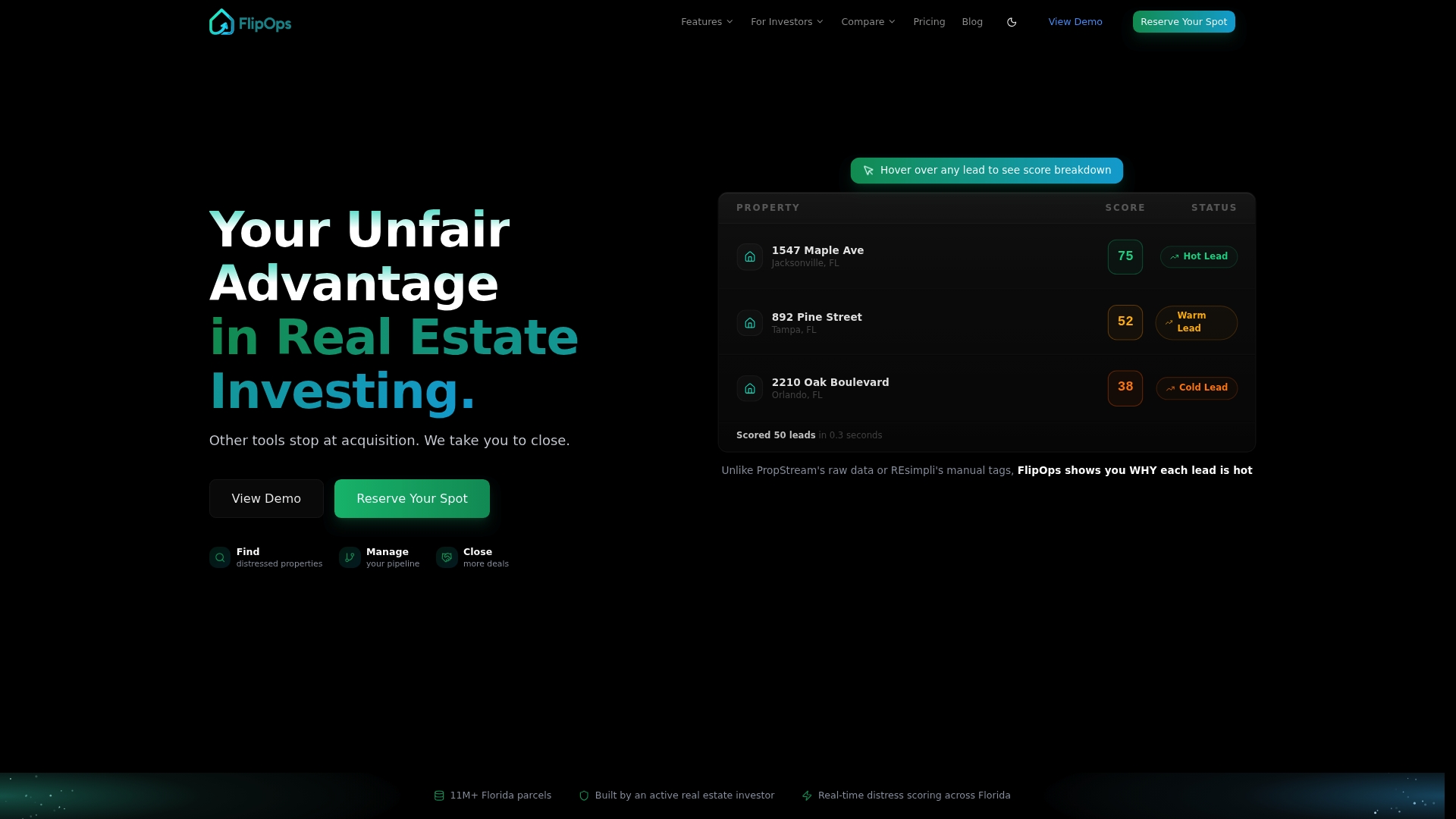
FlipOps reports AI distress scoring that evaluates leads using 15+ distress signals. The platform bundles automated skip tracing, a real-time MAO calculator, and renovation tracking into a single workflow. It currently focuses on Florida parcel data and states plans to expand coverage nationally.
Core Features
FlipOps combines lead discovery with automated skip tracing and adaptive scoring so investors can prioritize contacts quickly. The deal pipeline moves leads from contact through contract, and it includes deadline tracking, automations, and milestone alerts. Property management, rehab tracking, vendor management, and built-in financial guardrails tie post-close operations back to acquisition math.
Key Differentiator
FlipOps centers acquisition and operations in one system rather than stitching together separate apps. Its standout element is the pairing of adaptive AI distress scoring with a pipeline that enforces financial guardrails at every stage. That combination helps keep renovation budgets, deadlines, and expected returns visible from lead to lease.
Pros
The single-system approach reduces tool switching and keeps acquisition data linked to rehab and rental performance. The scoring model learns from input and helps you surface motivated sellers faster than manual screens. Integrated pipeline automations and deadline alerts cut follow-up gaps and lower the chance a lead lapses. Built-in budget alerts and margin checks act as protective controls during rehabs and negotiations.
Cons
Focused on Florida parcel records. Nationwide coverage is not yet available.
Several automations and workflows require manual setup. That creates a learning curve for new teams.
Enterprise features use custom pricing. Smaller investors may find advanced tiers expensive.
When It May Not Fit
Investors who operate outside Florida and need full national parcel coverage will find the platform limited today. Teams that require out of the box integrations with title companies may wait while those integrations are developed. Small-scale investors who want a zero setup solution may prefer lighter tools with lower upfront configuration needs.
Who It’s For
Active investors and small investment teams that run acquisitions, flips, and rentals primarily in Florida will get the most value. Wholesalers who need fast lead triage and fix-and-flippers managing rehab budgets fit the product profile well. BRRRR operators who want acquisition math tied directly to property management will also find FlipOps useful.
Real World Use Case
A wholesaler in Florida runs a list through FlipOps, uses the distress score to rank targets, and pulls owner contact via skip tracing. The wholesaler tests offer scenarios with the MAO calculator, moves promising deals through the pipeline, and sets deadline automations to avoid missed contingencies. After closing, the platform tracks rehab budgets and tenant income in the same account.
Pricing
The vendor lists plans starting at $149/month for the core package and offers higher tiers for teams and enterprise accounts. Advanced integrations and enterprise options use custom pricing and require a sales conversation. Full pricing details are available on the vendor pricing page.
Website: https://flipops.io
Land id®
At a Glance
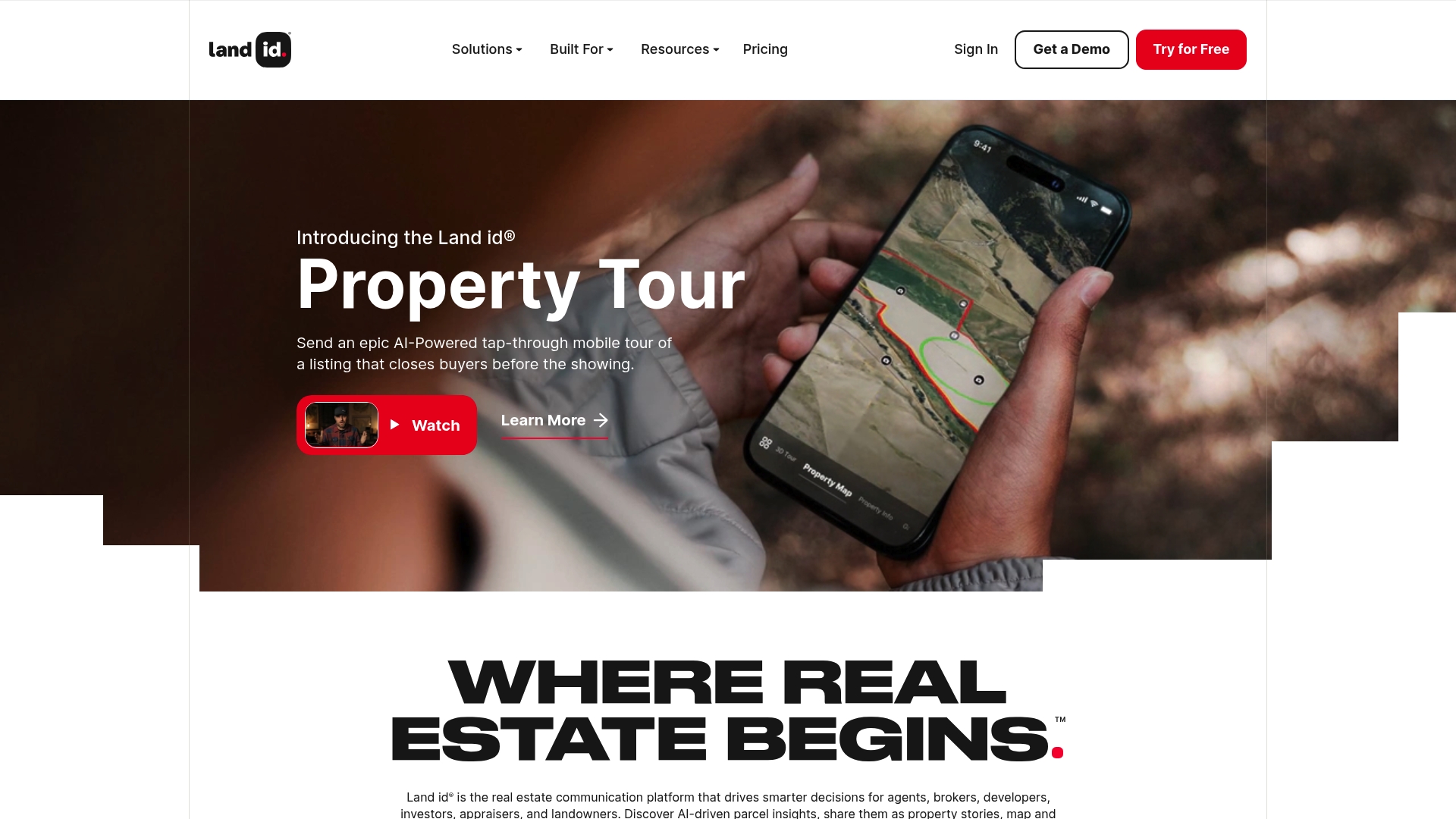
Land id® reports more than 50,000 property professionals use the platform. The system mixes parcel-level data with marketing tools so teams can build property stories and publish interactive tours from the same place. The product targets land specialists who need mapping, parcel insights, and project tracking on both mobile and desktop.
Core Features
Land id® delivers AI driven parcel insights and property storytelling alongside interactive maps and project management tools. Users can access property boundary, ownership, and soil data nationwide while layering aerial imagery and deed plotting over maps. The platform also supports property tour creation and embed options for marketing listings and proposals.
Key Differentiator
The clearest distinction is the combination of AI driven parcel insights with native storytelling and task tracking in one platform. That blend lets brokers and developers turn raw parcel records into narrated listings and project timelines without exporting between tools. The integrated marketing and mapping workflow shortens the path from research to buyer-facing deliverable.
Pros
The platform groups mapping, data analysis, and marketing features into a single environment so teams spend less time moving files between apps. The vendor advertises adoption by firms such as Cushman & Wakefield and Coldwell Banker, which supports its credibility for professional workflows. Nationwide access to ownership, soil, and boundary layers plus mobile compatibility helps agents and brokers research and present parcels while in the field.
Cons
Data accuracy and map customizability vary by region. Third party reviews report occasional mismatches and limited styling options.
The platform complexity may require onboarding for teams new to multi layer mapping and story authoring.
Pricing is not publicly listed here, so cost estimates require contacting the vendor.
When It May Not Fit
Buyers who require certified title grade data for closings should not rely on this as a single source. Teams with minimal GIS experience will face a learning curve before they see full value. Small sellers who only need simple listing pages may prefer a lighter tool with fixed pricing and less setup.
Who It’s For
Land id® fits land brokers, real estate agents, developers, appraisers, and investors who need parcel depth plus marketing output. It suits teams that run recurring land projects and want both research layers and buyer facing presentations in one place. Mobile field work and embedded tours make it practical for agents showing remote parcels.
Real World Use Case
A listing agent pulls ownership, soil, and boundary layers for a 40 acre tract. The agent uses the platform to build an interactive tour with parcel insights and aerial overlays, then embeds the tour on the listing site and in outreach emails. Prospects view the story, review deed plotting, and schedule site visits with context already attached to the listing.
Pricing
Pricing is not publicly listed. Prospective buyers must contact Land id® for plan details and a custom quote based on data needs and team size.
Website: https://id.land
PropStream
At a Glance
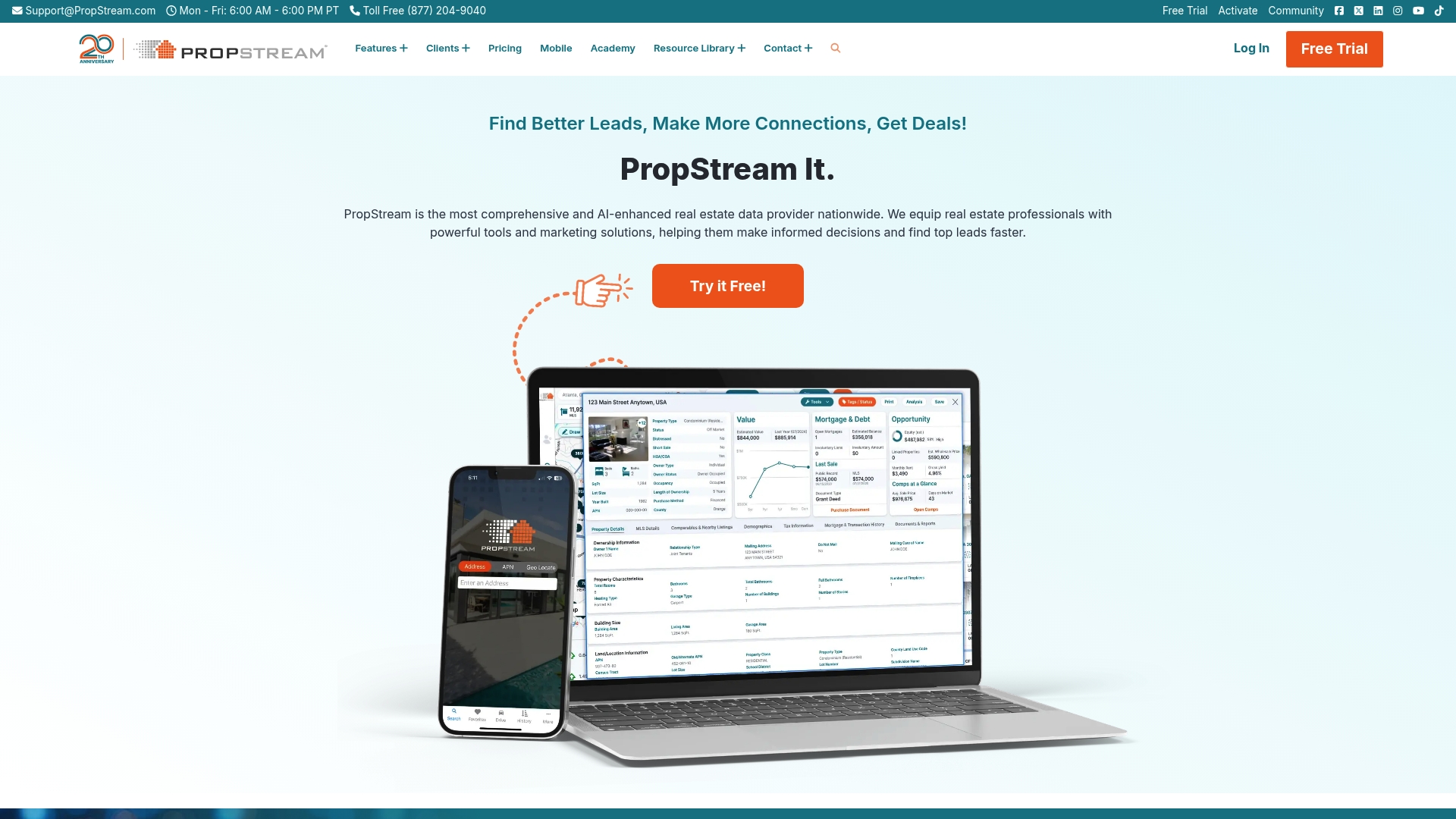
PropStream reports access to over 160 million properties. That scale feeds nationwide lead lists, property records, and neighborhood comparables. The platform pairs property data with built in outreach tools such as skip tracing and direct mail.
Core Features
The vendor advertises more than 165 filters and 20 lead lists to narrow searches by equity, vacancy, ownership, and other signals. AI enhanced lead signals surface potential sellers and market pockets, while valuation tools provide comps and rehab estimates. Integrated outreach covers skip tracing, calling, direct mail, plus team management and mobile access.
Key Differentiator
PropStream pairs AI enhanced signals with a nationwide property database and built in outreach tools. That combination speeds lead discovery and lets teams move from research to contact inside one platform. The vendor presents this integration as the primary advantage for investors focused on volume and campaign execution.
Pros
The platform provides marketing features and contact tools that reduce manual work and shorten campaign setup time. Mobile access and team features make handoffs easier for agents and brokers working in the field. Frequent data updates and an extensive resource library support users who need niche lists and campaign templates.
Cons
Data accuracy limits mean property intent and complex ownership disputes may not be fully resolved.
Several advanced features require add on subscriptions, which raises total cost for heavy users.
Proprietary data is not a substitute for official appraisals or legal advice.
When It May Not Fit
Do not choose PropStream for courtroom grade ownership evidence or formal appraisal needs. Large brokerages that require dedicated valuation and legal workflows will need additional tools beyond this platform. Teams with tight budgets may find add ons push total cost above their threshold.
Who It’s For
Real estate investors, agents, brokers, and property managers who rely on large scale property lists and outreach tools will find this useful. You get the most value when your business depends on volume lead generation and campaign execution. Multi market teams benefit from national coverage and mobile capabilities.
Real World Use Case
An investor filters for high equity properties, uses skip tracing to collect owner contacts, and runs a segmented direct mail campaign. The platform then tracks responses and supports calling to convert leads into appointments. That workflow reduces time from lead discovery to deal negotiation compared with manual research.
Pricing
Pricing follows monthly plans with optional add ons such as PropStream Connect. See the vendor pricing page for current plans and addon details.
Website: https://propstream.com
Comparison of alternatives
The available real estate intelligence platforms each present distinct strengths suited for varying operational needs. To determine the most suitable option, the analysis evaluates considerations including data depth, use-case alignment, and budget predictability.
Differentiated functionalities and coverage focus
Shovld distinguishes itself by offering early signals from real-time sources at a flat monthly fee. In contrast, Acres emphasizes historical land data, making it effective for valuation analysis. FlipOps integrates pipeline workflows tailored for Florida-specific operations, while Land id blends mapping with marketing tools to create visually enriched property presentations.
Practical scenarios and integration capacities
Acres excels in delivering deep historical context through its parcel and transactional data, enhancing nuanced evaluation capabilities for acquisition professionals. Similarly, PropStream’s lead management tools cater to teams conducting extensive outreach campaigns and list generation efforts. Meanwhile, Land id supports visualization and presentation workflows, benefitting users requiring integrated listing enhancement tools.
Best fit
Proactive teams focusing on signal clarity and immediate property opportunities benefit from Shovld’s extensive and predictable subscription structure.
Investors emphasizing historical parcel trends find Acres’ vast transaction database and GIS mapping capabilities integral to analytical processes.
Florida-based operations integrating acquisition to rental workflows align well with FlipOps’ tailored regional features and predictive tools.
Parcel insights blended with buyer-ready visuals fit Land id, offering an edge to developers creating presentation-driven marketing.
Our pick
Shovld emerges as the recommended choice for users prioritizing early signal identification within a flat cost structure, minimizing variable expenses. However, teams focusing on deep valuation analytics or specific geographic conditions may find Acres or FlipOps more appropriate. When considering streamlined signal clarity and tools tailored toward timely outreach, Shovld remains a strategic recommendation.
Considering which real estate signal intelligence platform offers the most comprehensive data workflow for proactive outreach is key.
PlatformKey DifferentiatorBest ForPricingNotable LimitationShovldVerified, AI-ranked real-time property signal streamContractors and real estate investors$99-$149/monthCoverage limited to nine states.AcresNationwide parcel database with GIS mappingAcquisition and development teamsPrice not publishedPlatform complexity requires onboarding.FlipOpsIntegrated acquisition and operations workflowFlorida-based real estate investorsStarts at $149/monthLimited to Florida parcel data currently.Land id®Parcel insights paired with interactive storytellingLand brokers and appraisersPrice not publishedMap customizability and data accuracy vary by region.PropStreamNationwide property database with outreach toolsVolume-focused property investorsPrice not publishedProprietary data not suitable for legal purposes.
What Challenges Do Contractors Face Finding Early Property Signals?
Contractors, restoration companies, public adjusters, and real estate investors often struggle with timing when sourcing property leads. The trap lies in competing once projects surface to everyone else, playing in a commoditized market with limited early insights. Shovld solves this timing problem by turning scattered public signals—permits, code violations, deferred maintenance, and more—into verified, AI scored opportunities that appear before others recognize them.
Shovld offers:
Early-stage signals to get ahead of competitors
Unlimited opportunities with flat monthly pricing
Built-in outreach templates and appointment tools
Get predictable pipelines instead of unpredictable bidding wars. Visit Shovld to see how your team can act fast on prioritized signals and build deals before the market reacts.
FAQ
What features make Shovld suitable for early-stage opportunities?
Shovld specializes in monitoring more than 50 real-time sources for construction and property signals. This capability allows contractors, public adjusters, restoration companies, and real estate investors to access early-stage opportunities. Teams looking for a timing advantage in outreach will find this feature essential.
How does Shovld differ from Acres in terms of land records access?
Acres provides access to over 150 million parcel records and 45 million land transactions, which supports broad historical context. Shovld, on the other hand, focuses on verified signals and early alerts rather than extensive land transaction histories. Teams that require immediate project visibility without needing extensive historical data will benefit more from Shovld.
Which platform is better for contractors looking for CRM features?
Shovld includes built-in CRM capabilities and appointment scheduling tools, which streamline outreach efforts for contractors. In contrast, Acres primarily focuses on land transaction data without built-in CRM features. Contractors looking for a consolidated system with outreach and scheduling in one place should choose Shovld.
Does Shovld offer pricing flexibility compared to its competitors?
Shovld offers flat monthly pricing with unlimited signals and no per-lead charges, allowing for predictable budgeting. Other platforms like FlipOps may utilize different pricing structures, which could add variability in costs. Teams seeking affordable and consistent pricing will find Shovld preferable.
How does Shovld support proactive outreach for restoration companies?
Shovld surfaces early construction and property signals before homeowners or traditional sources identify projects, which is crucial for restoration companies. The system’s AI-scored prioritization also ranks signals by urgency, allowing teams to focus on high-priority leads quickly. Restoration companies aiming for prompt action on available opportunities will find this feature very useful.